

Stay ahead of your competition with these insights on strategies, industry trends, and channel news. Want to go deeper? Click on “take a bigger byte” at the end of each item.
 Losing a major client often starts with an executive who can’t see your value
MSP trend to watch: Executive relationships, measurable business outcomes and customer concentration are becoming core parts of MSP account resilience.
When a major client starts questioning whether they still need their MSP, the problem may have less to do with service quality than with who understands its value. In this case, the MSP had strong internal IT champions, but little direct influence with the director focused on cutting costs. The takeaway for providers is clear: build relationships above the technical team, quantify the real cost of bringing services in-house and use ticket volume, staffing needs, tooling and operational risk to make the business case. And even if the account is saved, treat the scare as a signal to reduce reliance on any single customer. Take a bigger byte here.
 Proofpoint puts Microsoft 365 tool sprawl in the spotlight
MSP trend to watch: When does consolidation actually make an IT business stronger?
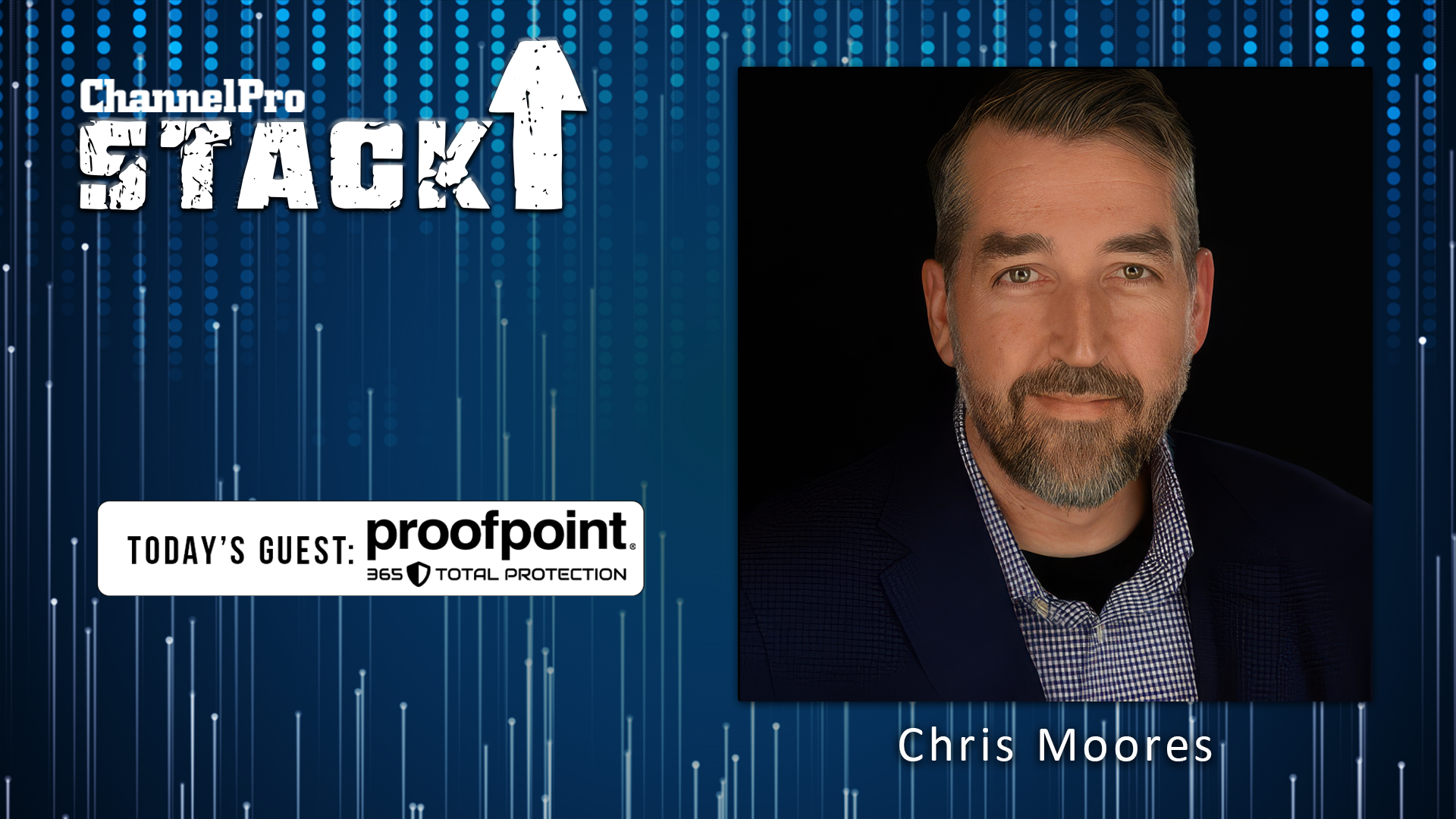
ChannelPro’s Stack Up! episode with Proofpoint’s Chris Moores focuses on an ongoing issue for MSPs: tool sprawl. Proofpoint 365 Total Protection brings Microsoft 365 security, backup and awareness training into one platform, giving providers a way to standardize protection while reducing administrative drag. For MSPs, the bigger issue is whether a simpler stack can improve margins without weakening client outcomes. Take a bigger byte here.
 Cyber insurers are turning device visibility into an MSP accountability test
MSP trend to watch: Legal exposure, vendor risk and compliance are becoming core parts of MSP business resilience.
Cyber insurers are asking tougher questions about unmanaged endpoints, BYOD devices and forgotten hardware because data exposure risk now extends far beyond the network perimeter. Cam Roberson of Beachhead Solutions argues that MSPs need to make device audits part of onboarding and annual reviews, not a scramble when renewal paperwork arrives. For MSPs, the opportunity is to turn endpoint visibility into a recurring risk service that helps clients avoid premium hikes, remediation surprises and denied claims. Take a bigger byte here.
 The CISO role is moving beyond risk management
MSP trend to watch: Security leadership is shifting from prevention alone to resilience, recovery and AI governance as board-level business priorities.
The CISO role is expanding as AI adoption forces enterprises to rethink how they defend systems and restore operations after disruption. The article points to a larger shift: security success is no longer measured only by risk reduction, but by how quickly organizations can recover to a trusted state. For MSPs and MSSPs, the opportunity is to support clients with resilience planning, AI guardrails and visibility across identity and governance before downtime becomes a boardroom crisis. Take a bigger byte here.
 Botched data requests create a new compliance headache
MSP trend to watch: Privacy compliance is becoming an operational risk as companies struggle to manage data access requests correctly.
Reports of consumers receiving deleted data notices, denials or confusing responses after filing CCPA access requests point to a bigger issue for security leaders. Data privacy rights are only as strong as the workflows behind them. For MSPs and MSSPs, the opportunity is to help clients tighten request handling, verification and data governance before a compliance process becomes a reputational problem. Take a bigger byte here.
 MSPs that ignore CTEM may look replaceable
MSP trend to watch: Cyber insurers are pushing clients from point-in-time security checks toward continuous exposure evidence.
CTEM gives MSPs a way to turn vulnerability scans, remediation tracking and compliance evidence into a recurring service instead of a one-off assessment. Mitchum Mohamed argues that clients will increasingly need proof of ongoing visibility to satisfy insurers and reduce exposure. For MSPs, the opportunity is to build a stickier security service that creates monthly revenue while making clients harder to lose at renewal time. Take a bigger byte here.
 Claude incident turns AI sharing into a client risk conversation
MSP trend to watch: AI governance is moving from policy talk to practical controls around what users share, where data goes and how public those tools really are.
Publicly shared Claude conversations were reportedly indexed by Google and Bing, exposing a privacy gap that many users may not have understood. The issue was not a traditional breach, but it showed how quickly “anyone with the link” can become “anyone with a search box.” For MSPs, the lesson is clear: clients need training, guardrails and review processes around AI sharing features before sensitive business data ends up in places no one expected. Take a bigger byte here.
Low-voltage work can create big insurance headaches for MSPs
MSP trend to watch: Carriers are scrutinizing MSP services more closely, especially when providers blur the line between IT support and higher-risk field work.
A Reddit post about a major insurance carrier dropping an MSP after 11 claim-free years because of occasional low-voltage cabling shows how small service add-ons can create outsized insurance problems. The thread points to a larger issue for MSPs: cabling, cameras and physical installs may carry different liability, workers’ comp and underwriting risks than traditional managed services. For providers, the takeaway is to be clear with insurers, separate higher-risk work where needed and make sure the business model matches the coverage. Take a bigger byte here.
 Cyber insurance is becoming an MSP growth lever
MSP trend to watch: Insurance requirements are turning security gaps, documentation and compliance drift into recurring service opportunities.
Cyber insurance can feel like paperwork, but for MSPs it is becoming a roadmap for higher-value client conversations. Jenny Knafo of Inscora argues that carrier requirements give providers a clear way to identify gaps, package security services and prove ongoing value. For MSPs, the opportunity is to turn renewal pressure into year-round insurability services that strengthen trust, improve retention and create new revenue. Take a bigger byte here.
Fortinet brings AI governance closer to endpoint security
MSP trend to watch: Shadow AI is becoming an endpoint risk, pushing MSSPs to manage AI use, data protection and device posture from fewer consoles.
Fortinet’s FortiEndpoint expansion adds AI visibility, data loss prevention and endpoint risk scoring to a single-agent platform. The move reflects a broader push to help security teams see which AI tools employees are using, control risky activity and protect sensitive data before it leaves the device. For security providers, particularly MSSPs, the update creates service opportunities around shadow AI discovery, endpoint governance and managed risk reduction. Take a bigger byte here.

MSPs can’t treat cloud security like traditional IT support
MSP trend to watch: Cloud adoption is pushing MSPs to move beyond basic support and become strategic partners in security, compliance and risk management.
As customers spread data and workloads across cloud and hybrid environments, MSPs are being asked to manage more complexity with fewer skilled resources. OTAVA’s Frank Arnett argues that providers need stronger cloud security expertise, more mature service delivery and a clearer role in helping clients reduce risk. For MSPs, the opportunity is to turn cloud security into a core service that strengthens customer trust and creates more recurring value. Take a bigger byte here.
 Azure CLI attacks expose the gaps that MFA can miss
MSP trend to watch: Identity security is shifting from “MFA enabled” to proving MFA applies across every authentication path clients actually use.
Huntress researchers observed more than 81 million automated login attempts targeting Microsoft Azure’s CLI over a 14-day period, with 78 accounts compromised across 64 organizations. The attacks show how legacy authentication flows and overlooked client access paths can create openings even when MFA is in place. For MSPs, the message is clear: identity protection now requires continuous review of MFA coverage, tighter control over tools like Azure CLI and stronger visibility into how users authenticate across cloud apps. Take a bigger byte here.

Generic network security proposals are where MSP deals go to die
MSP trend to watch: Buyers are expecting providers to show real vertical expertise, not recycle the same security pitch with a new logo on top.
One-size-fits-all network security proposals fall flat because every industry has different risks and compliance pressures. The stronger move is to tailor each proposal around the buyer’s world, show the relevant security roadmap and prove why your recommendations fit their business. Take a bigger byte here.

MSP cybersecurity risk starts with the business model
MSP trend to watch: Providers are under more pressure to standardize security expectations, document shared responsibilities and reduce risky client exceptions.
The free MSP Cybersecurity Risk Playbook focuses on a growing challenge for providers: security services can create risk for the MSP if expectations, contracts and client protections are not clearly defined. Take a bigger byte here.

3 ways to secure enterprise apps in the AI age
MSP trend to watch: As clients add AI to business-critical systems, security conversations are moving deeper into application risk and access control.
AI adoption is putting new pressure on enterprise applications like SAP, where AI-generated code and agentic workflows can increase speed while also expanding the attack surface. For MSPs and security providers, the opportunity is to help clients apply secure-by-design practices, stronger access controls and faster threat response without slowing down innovation. Take a bigger byte here.
 Timus acquisition gives CyberFOX a bigger role in the MSP security stack
MSP trends to watch: Security vendors are consolidating around simpler, integrated platforms as providers try to reduce tool sprawl.
CyberFOX’s acquisition of Timus Networks adds SASE and ZTNA capabilities to its MSP security portfolio, expanding beyond privileged access, password management, and DNS filtering. The deal reflects a broader vendor push to simplify secure access, identity protection, web security, and policy control for MSPs that need to grow recurring security revenue without adding more operational complexity. Take a bigger byte here.
 Michael Crean of SonicWall says cybersecurity has to move past the feature race
MSP trends to watch: The security conversation is shifting from product capabilities to measurable outcomes, operational accountability and proof that controls are actually working.
In his new contributed article, SonicWall’s Michael Crean argues that SMB security failures are caused by misconfiguration, complexity, weak maintenance and poor operational follow-through. His core point is that features do not equal protection unless MSPs can turn them into measurable outcomes such as breach prevention, reduced downtime, audit readiness and lower human error. For MSPs and MSSPs, the message is clear: clients do not need another complicated console; they need security that is actively configured, monitored, managed, and tied to business resilience. Take a bigger byte here.
 SuperOps, Guardz target MSP tool sprawl with a unified approach
MSP trends to watch: AI readiness is making tool integration more urgent because MSPs need cleaner data, connected workflows, and less dashboard switching.
SuperOps and Guardz have launched a strategic partnership and bundled offering that combines SuperOps’ IT operations platform with Guardz’s agentic security operations and MDR capabilities. The team-up is aimed at helping MSPs unify service delivery, endpoint management, automation, security monitoring, and threat response as they prepare for more AI-driven workflows. Take a bigger byte here.
Cynomi targets the vCISO delivery gap
MSP trends to watch: vCISO services are moving from one-time assessments to recurring governance models that require repeatable workflows and automation.
With new vulnerability integrations, scheduled scans, file management, and AI-assisted findings review, Cynomi is targeting the operational work behind recurring vCISO services. For MSPs and MSSPs, the key question is whether these workflows can turn vulnerability data, remediation, compliance evidence, and reporting into scalable, profitable governance. Take a bigger byte here.
 Voice of the Vendor tracks where the industry is headed
MSP trends to watch: Vendors are increasingly positioning around MSP growth, operational efficiency, resilience and service expansion rather than individual product features.
Missed Pax8 Beyond? We’ve got you covered. In this new podcast episode, ChannelPro VP and Associate Publisher Joel Zaidspiner gets candid with Acronis, Alternative Payments, Squash and AvePoint live at the event. Each conversation focuses is on how innovative vendors are helping IT providers strengthen resilience, streamline operations, improve client value, and find new ways to grow. Take a bigger byte here.
 Security failures often start with process drift
MSP trends to watch: The next phase of MSP cybersecurity maturity requires standardization and consistent execution across clients.
Many MSPs view cybersecurity as a stack problem, even as the most damaging failures often come from inconsistent documentation, weak asset visibility, untested backups, technician shortcuts and process drift. Tools still matter, but tools and framework sonly work when they are operationalized consistently. For MSPs, the next phase of security maturity requires standardization and accountability across every client environment. Take a bigger byte here.
 MSPs can turn AI uncertainty into managed services revenue
MSP trends to watch: AI is creating a new managed services category around governance, oversight, security, workflow design and human review.
AI will not reduce the need for managed services; it will expand the places where MSPs can add value. Customers may want AI’s speed, automation, and data-processing power, but they still need human judgment. For MSPs, the opportunity is to package that oversight as a managed service: helping clients deploy AI safely, monitor how it is used, secure the systems around it and keep a human accountable when the technology reaches its limits. Take a bigger byte here.
After-hours support is where weak MSP SLAs get exposed
MSP trends to watch: MSPs are under pressure to define service boundaries more clearly as clients expect broader coverage without always paying for it.
A Reddit post from u/Creative-Owl-4210 captures a common MSP tension: small clients increasingly expect after-hours help, but the economics rarely support true overnight coverage at low MRR. When an 8-user client treats an 11 p.m. password reset like an emergency, the issue is not just service availability; it is unclear scope, pricing and SLA discipline. For MSPs, the practical move is to separate real priority one incidents from routine access requests, add self-service tools where possible, charge appropriately for after-hours support, and make 24/7 coverage a paid tier rather than an assumed benefit. Take a bigger byte here.
 Cybersecurity is shifting from tools to execution
MSP trends to watch: Advanced security services now require pricing discipline, documented processes and clear client communication.
The Advanced MSP Cybersecurity Blueprint points to a larger shift in managed services: stronger security offerings are no longer defined by how many tools an MSP can bundle, but by how well the provider can operationalize security. Internal capability matters first, because advanced security services require trained staff, documented processes, clear escalation paths and disciplined tool usage. From there, MSPs need layered packages that align client needs to risk tolerance. Take a bigger byte here.

Claude Fable 5 shows frontier AI is now a national security issue
MSP trends to watch: MSPs advising clients on AI must now consider regulatory, data retention, access control and national security implications.
Anthropic’s release and rapid suspension of Claude Fable 5 shows how quickly frontier AI can move from product launch to policy flashpoint. The model offered public access to Mythos-class capabilities with safeguards, but the U.S. government’s order to restrict access for foreign nationals turned a technical governance debate into an export-control and national security issue. For MSPs and IT leaders, the lesson is bigger than one model: as AI systems become more powerful, adoption decisions will need to account for data retention, user access, cyber risk, regulatory exposure, and cost controls before clients plug them into sensitive workflows. Take a bigger byte here.
Non-human identities are forcing security teams to rethink access management
MSP trends to watch: As automation and AI agents spread, MSPs will need stronger identity governance for machine identities.
Service accounts, API keys, OAuth apps, certificates, bots, automations, integrations and AI agents can no longer be treated as background infrastructure. As non-human identities multiply across SaaS, cloud, CI/CD, and AI workflows, the risk is not just that teams have too many accounts to track; it is that many organizations do not know who owns them, what they can access, what business processes depend on them, or what would break if they were restricted or removed. For MSPs and security leaders, the priority is shifting from periodic identity reviews to continuous visibility, ownership, least privilege, automated rotation, and fast revocation when non-human access becomes risky. Take a bigger byte here.
 Financial discipline is becoming a core growth requirement for MSP owners
MSP trends to watch: MSP growth is becoming more margin-sensitive, making cash flow, pricing, utilization, and financial visibility more strategic.
The new ChannelPro financial best practices guide focuses on a problem many growing providers face: revenue can rise while profitability, cash flow, and operational discipline quietly weaken. Created with Andrew Jordan of NodeWise CPA, the guide gives MSP owners a practical way to understand the metrics, processes, and habits that support healthier decision-making. For MSPs, the goal is not just to grow bigger, but to build a business that can track margin, manage cash flow, avoid financial blind spots, and scale with more confidence. Take a bigger byte here.
What is an MSP’s liability when a client insists on pirated software?
MSP trends to watch: Client risk acceptance is becoming a bigger contractual and operational issue as MSPs are asked to support unsafe exceptions.
A Reddit post from u/bigTractor raises a scenario many MSPs would rather avoid: a customer working with a third-party vendor to install pirated heavy equipment software on a laptop already triggering malware, virus, and trojan alerts. The customer still wants help blocking licensing servers, turning a questionable workaround into a bigger security, legal, and support risk. For MSPs, the issue is not only whether the software is illegal; it is whether supporting the device makes the provider part of the exposure. The safer move is to document the warnings, isolate or remove the asset from managed environments, refuse unsafe changes, and decide whether the client still fits the MSP’s standards. Take a bigger byte here.
The worst IT failures often happen in the handoff
MSP trends to watch: Offboarding is becoming a critical MSP risk-control process, especially as access, documentation, and vendor accountability get more complex.
IT Nightmares #004 featuring MSP leader Eric Weast shows why offboarding is one of the most overlooked risk moments in managed services. What started as a routine transition quickly become a security incident. For MSPs and other IT leaders, the lesson is simple: offboarding need the same discipline as incident response, because gaps between “who had it” and “who owns it now” can become the opening attackers exploit. Take a bigger byte here.
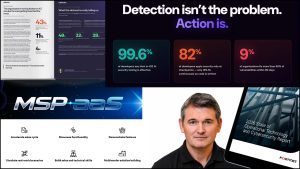 Kaseya’s latest launch tackles the market visibility challenge for MSPs
MSP trends to watch: Major vendors are expanding beyond technical platforms into business growth ecosystems that help MSPs with marketing, peer learning and lead generation.
Kaseya’s launch of MSP Success reflects a broader shift in the channel: MSPs do not just need more tools to run client environments, they need stronger systems to grow their own businesses. By combining digital marketing, peer groups, community support, and lead generation into one ecosystem, Kaseya is addressing a pain point many providers know well: technical expertise does not automatically translate into market visibility or predictable pipeline. For MSPs, the opportunity is not just outsourcing marketing tasks, but building a more disciplined growth engine. Take a bigger byte here.
 Pax8 Beyond 2026: Agentic AI is here and MSPs must act now
MSP trends to watch: Agentic AI is pushing MSPs to move faster on shadow AI discovery, governance and managed intelligence services.
Pax8 Beyond 2026 made the shift clear: MSPs do not need perfect AI expertise before talking to clients, because customers are already experimenting without them. The real opportunity is to uncover shadow AI, set governance rules, build internal muscle, and turn managed intelligence into a recurring service before someone else owns that conversation. Take a bigger byte here.
The Top 250 MSSPs application process opens and signals where the market is headed
MSP trends to watch: Recognition programs are becoming more important trust signals as the managed security market gets more crowded and specialized.
MSSP Alert’s 2026 Top 250 MSSP survey is open, with new categories recognizing innovation, growth, emerging players, and market focus. The shift reflects how buyers are judging providers today: not just by size, but by credibility, delivery model, measurable outcomes, and momentum. For managed security providers, third-party validation is becoming a stronger trust signal in a crowded security market. Take a bigger byte here.
Changes in the Channel: Leadership moves and shakeups
MSP trends to watch: Channel leadership changes show where vendors are investing next: AI, cybersecurity, partner growth, finance discipline and operational scale.
This week’s channel leadership shifts show companies doubling down on partner growth, AI, cybersecurity, finance discipline, and operational scale. From Mitel’s new global channel chief to Hatz AI’s new president, these moves point to where vendors are placing their next bets — and which leaders they trust to turn momentum into execution. Take a bigger byte here.

AI services are moving MSPs into profitable decision-making roles
MSP trends to watch: MSPs are being pulled upstream from tool support into AI planning, readiness assessment, workflow strategy and business outcome measurement.
With its Managed Intelligence Provider Program, Managed Intelligence Services, and Agent Store, Pax8 is positioning partners to help SMBs plan, launch and track AI projects. The risk is that customers adopt agents faster than they can secure them. MSPs should focus less on AI access and more on readiness. Take a bigger byte here.
MSPs are reassessing where Microsoft Defender fits
MSP trends to watch: The Defender debate reflects a broader shift toward platform consolidation, but configuration and monitoring remain essential.
A lively r/MSP thread shows the real debate is not whether Microsoft’s endpoint security is “good now,” but whether MSPs are configuring, monitoring, and pairing it correctly. The takeaway: Defender is a great solution for basic protection, but modern businesses needs policy discipline, EDR/MDR support, identity controls, and someone actually watching the signals. Take a bigger byte here.
Why Acronis thinks MDR can solve MSP scale problems
MSP trends to watch: MDR demand reflects the reality that MSPs need security operations capacity without always building a full internal SOC.
Acronis is capitalizing on a growing reality: MSPs can deploy security tools, but delivering consistent 24/7 monitoring and response remains far more difficult. By outsourcing security operations instead of adding more technology, MSPs may be able to scale security services without scaling headcount. Take a bigger byte here.
 AI only creates value when MSPs apply it to the right workflows
MSP trends to watch: MSPs are moving from AI experimentation to workflow-level ROI analysis, governance and practical implementation planning.
Many MSPs feel pressure to adopt AI, but not every process benefits from automation. The real opportunity lies in identifying where AI can eliminate bottlenecks, improve efficiency, and support better outcomes without creating new risks. This guide helps MSP leaders evaluate AI opportunities through a practical lens, with real-world use cases and a workflow assessment framework that considers operational fit, ROI, security, compliance, and human oversight. Take a bigger byte here.
Mac users are not immune to malvertising
MSP trends to watch: MSP endpoint management now has to account for macOS risk, approved software controls, browser security and user behavior across mixed environments.
A new campaign is using malicious Google Ads for podcast players and PDF viewers to spread FlutterShell, a macOS backdoor that can hijack Chrome searches, manipulate files, run commands, and steal data from uploaded documents through a fake AI summary feature. The bigger issue is that these apps appear to work as advertised, making them harder for users to question. MSPs and IT teams should treat ad-driven software downloads as a real endpoint risk, tighten controls around approved apps, and remind users that convenience tools can become a delivery path for malware. Take a bigger byte here.

Great MSP proposals start with the client’s pain, not your pitch
MSP trends to watch: MSP sales is becoming more consultative, with stronger proposals tied to discovery, business pain, risk reduction, and measurable outcomes.
MSPs write proposals to win business, but many hurt their chances by saying too much, being vague, or focusing too heavily on their own services. The stronger approach is to follow the client’s rules, be clear about what is included, connect recommendations to the problems uncovered in discovery, and show the business value of solving them. Pricing should be transparent, outcomes should be specific, and the next step should be easy to understand. For MSPs, a great proposal is not just a service list. It is a clear case for why the client should trust you to solve the problem that matters most. Take a bigger byte here.

Client offboarding is where MSP professionalism gets tested most
MSP trends to watch: As client churn and provider switching increase, MSPs need repeatable offboarding processes that protect access, liability, and reputation.
A recent post in r/MSP from u/HappyDadOfFourJesus sparked a discussion about what MSPs should not say when a client is leaving. The conversation shows how emotional offboarding can get, especially when a client relationship has been difficult, expectations were unclear, or the MSP believes the new provider is a poor fit. Several redditors pointed out that even well-meaning comments can create problems if they sound like free support, personal criticism, or a promise of a smooth transition. The bigger lesson is that MSPs need a clear offboarding process that sets boundaries, removes access, documents responsibilities and defines any post-contract support rates. Take a bigger byte here.
Cyber insurance readiness is becoming a managed security conversation
MSP trends to watch: Cyber insurance requirements are turning security documentation, evidence collection and control validation into recurring MSP service opportunities.
Cyber insurance is no longer just a policy discussion. Insurers are asking harder questions about MFA, endpoint coverage, patching, backups, logging, incident response and whether those controls can be proven when it matters. The risk is that clients think they are ready because tools are in place, but they lack the evidence, documentation and workflows needed for underwriting, renewals or recovery after an incident. For MSSPs, the opportunity is not to become insurance brokers. It is to help clients turn security operations into usable proof, identify control gaps, and show what is working, what is covered and what still needs attention. Take a bigger byte here.

Tool sprawl is really an operations problem
MSP trends to watch: MSPs are recognizing that tool sprawl hurts margins, technician efficiency, client consistency and the ability to automate.
Tool sprawl usually starts with good intentions: a new client requirement, a compliance need, a vendor relationship, or a merger that brings another platform into the stack. But over time, all those reasonable decisions can leave MSPs with too many dashboards, too many alerts, and too much manual work holding everything together. The real cost is not just the software spend. It is the operational drag that slows technicians, hurts margins, and makes it harder to deliver consistent outcomes. For MSPs, the goal is not simply a smaller stack. It is a smarter, more intentional stack where every tool has a purpose and every workflow has an owner. Take a bigger byte here.
Autonomous IT is only as smart as the visibility behind it
MSP trends to watch: Autonomous IT depends on clean, connected operational data, making visibility and governance prerequisites for AI-driven service delivery.
Autonomous IT is exciting, but it cannot work well if teams do not know what is actually running across their environments. AI can help reduce alert fatigue, automate fixes, and support overworked IT teams, but only when the data underneath it is clean, connected, and visible. The risk is that companies rush toward self-healing systems while still dealing with tool sprawl, shadow AI, unmanaged devices and blind spots. For MSPs and IT leaders, autonomy is only useful when it can be trusted. The first step is not more AI. It is better visibility, stronger governance, and a clear understanding of where automation is safe to use. Take a bigger byte here.

Co-managed IT only works when everyone knows their lane
MSP trends to watch: Co-managed IT is growing as clients keep internal IT but still need MSP expertise, tools, coverage and escalation support.
A recent post in r/MSP from u/FlaTech18 spurred a reddit discussion about whether internal IT can coexist with outsourced IT support. The conversation highlights how co-managed IT has become a practical option for companies that need both internal support and outside expertise. The strongest setups give each side a clear role: internal IT handles daily support and company context, while the MSP brings specialized skills, project depth, tools, coverage, and escalation. Take a bigger byte here.

Advanced cybersecurity starts with knowing where you stand
MSP trends to watch: MSPs need to assess their own readiness before selling more advanced security services to clients.
Many MSPs want to sell more advanced cybersecurity services, but growth starts with an honest look at what they can actually deliver. The right clients, tools, skills, certifications, and service gaps all matter before an MSP can confidently move beyond basic protection. That is why a checklist can be useful: it turns a big strategic goal into a practical readiness test. For MSPs, the opportunity is not just adding more security services. It is building the capability, confidence, and trust needed to sell them well. Take a bigger byte here.
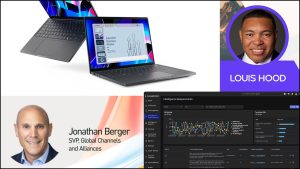
AI security is moving from theory to partner-led services
MSP trends to watch: AI security is becoming a new managed service lane around agent discovery, access control, vulnerability management, and governance.
AI security becoming more concrete. CrowdStrike is expanding Project QuiltWorks, 7AI is pushing managed agentic security, and vendors like Xage are focusing on how to control autonomous agents in production. The bigger signal for MSPs is that AI risk is turning into a service category, not just a product feature. Customers will need help finding vulnerabilities, managing agents, controlling access, and proving that AI systems are safe enough to run. That creates a new lane for partners that can turn AI security concerns into managed outcomes. Take a bigger byte here.
Delays aren’t a delivery problem — they’re a planning problem
MSP trends to watch: Project discipline is becoming a margin issue for MSPs as poor planning leads to delays, scope creep and lower profitability.
MSP projects usually do not run late because teams are lazy or overloaded. They run late because the plan missed key dependencies, client inputs or timing issues from the start. For MSP leaders, delays affect more than delivery dates. They hurt margins, create stress for teams and chip away at customer trust. The message for MSPs is simple and clear: better project outcomes start with a more realistic plan. Take a bigger byte here.
Shadow AI agents are becoming the next visibility problem for MSSPs
MSP trends to watch: MSSPs have an emerging opportunity to discover, monitor, and govern AI agents that traditional security tools may miss.
Employees are building AI agents inside workplace tools faster than security teams can inventory them, and API-only discovery can leave major blind spots. The risk is that these agents can keep permissions, connect to business apps, move data, and trigger workflows without clear ownership or oversight. For MSSPs, browser-based discovery can help surface shadow agents, map them to users, and turn AI activity into repeatable governance and risk review. Take a bigger byte here.

Agentic AI is forcing MSPs to rethink what they sell
MSP trends to watch: Agentic AI is shifting MSP value away from ticket volume and toward prevention, oversight, strategic guidance and outcome-based services.
Agentic AI is not just another automation tool for the help desk. It changes the economics behind the MSP model. When routine issues can be found, fixed, and closed without a technician, the value of the provider moves away from hours worked and toward outcomes delivered. That puts pressure on pricing, staffing, and client conversations. MSPs will need to show value through prevention, oversight, and strategic guidance, not just fast response times. The providers that adapt their model early will have a better chance of shaping what customers expect next. Take a bigger byte here.

Least privilege is becoming basic security hygiene
MSP trends to watch: Endpoint privilege management is moving from advanced security add-on to baseline control as insurance, ransomware and compliance pressure increase.
Antivirus became automatic because everyone understood the risk. Endpoint privilege management has not reached that same level yet, even though local admin rights remain one of the easiest ways for attackers to spread after a compromise. For MSPs, this creates both a security issue and a business opening. SMBs may not ask for least privilege by name, but cyber insurers, auditors, and ransomware realities are pushing it closer to the baseline. The message is clear: removing unnecessary admin rights is not an advanced security project anymore. It is basic protection that many clients still have not handled. Take a bigger byte here.
Convergence is no longer a strategy conversation — it’s a customer expectation
MSP trends to watch: Customers increasingly expect simpler buying experiences, unified billing and integrated outcomes.
The conversation around convergence is finally catching up to how customers actually buy. Partners have been debating models for years, but buyers have already moved on – they expect one place to purchase, one invoice, and a consistent experience across everything they consume. That shift puts pressure on the entire channel to rethink how it shows up at the front end, even if the back end stays fragmented. For partners, this changes where differentiation lives. It’s less about the label – MSP, VAR, distributor – and more about where you plug into the customer lifecycle and what outcomes you own. The real opportunity is in orchestrating that complexity without exposing it, which is easier said than done, but that’s where the next phase of channel value is being built. Take a bigger byte here.

AI demand is growing fast — but MSPs need cash flow to keep up
MSP trends to watch: AI infrastructure demand may create growth opportunities, but MSPs need financing and working capital discipline to capture them.
The AI infrastructure boom is creating real opportunity for MSPs, but opportunity does not always equal easy growth. If clients need bigger data center capacity, AI-ready systems, or more advanced infrastructure, MSPs may have to invest heavily before they see the revenue come back. That can turn growth into a cash flow problem. Financing matters because it lets MSPs say yes to larger projects without tying up all their working capital. The larger lesson is simple: AI demand may be rising, but MSPs that cannot fund the work may miss the upside. Take a bigger byte here.
The real risk of AI may be what organizations can’t see
MSP trends to watch: Shadow AI is becoming a visibility and governance problem that MSPs can turn into discovery, policy, monitoring, and advisory services.
Shadow AI is becoming a real blind spot for organizations. Customers are already using AI tools outside approved systems, which means data and risk are moving without showing up in normal security workflows. That creates less visibility and slower response. At the same time, it opens up an opportunity. While partners can step in with services to find, monitor, and manage AI usage across customer environments, this is starting to move from a policy issue to something CISOs will need to handle as part of their core security services. Take a bigger byte here.
Featured image: AI generated by ChatGPT