
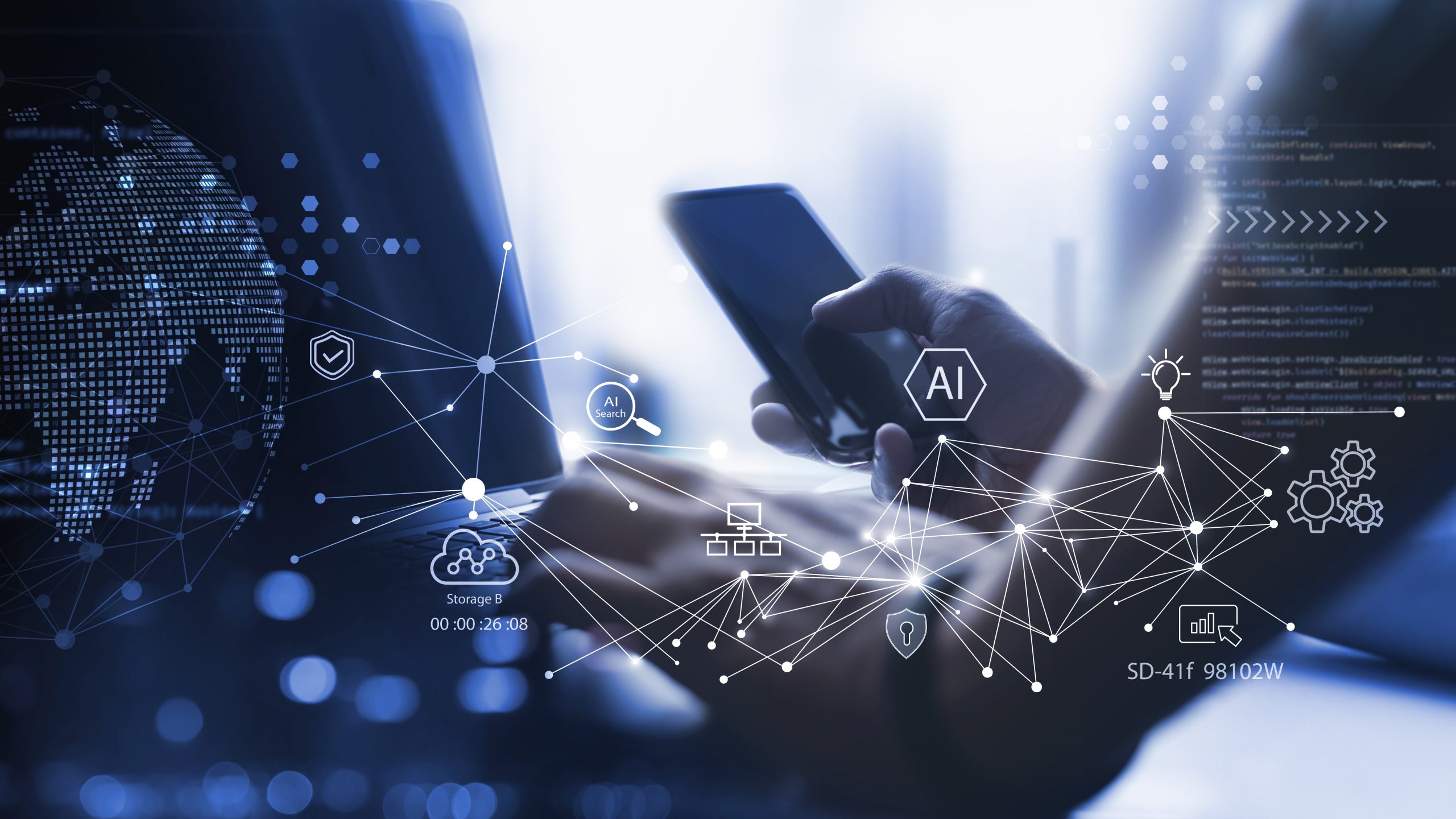
AI has moved beyond being a buzzword for security providers. It’s now the terrain where defenders and cyber attackers are actively competing — and the pace is accelerating.
Artificial intelligence is reshaping how channel professionals manage, detect and respond to cyber risks. It’s also changing how threat actors launch, scale and refine attacks. This isn’t a future-state concern. It’s happening right now in production environments to real customers.
For MSPs and MSSPs, AI represents both an opportunity to scale protection and a responsibility to understand how the threat landscape is changing underneath them.
AI is changing the defender’s playbook
Used well, AI can dramatically improve a security provider’s ability to protect customers while managing margin and analyst burnout. Its real value isn’t novelty; it’s leverage.
Some of the most meaningful advantages include:
- Predictive threat detection: AI-driven security tools can identify patterns and behaviors that indicate malicious activity before a known signature exists. That makes them particularly effective against zero-day exploits, polymorphic malware and fileless attacks that routinely bypass traditional controls.
- Automation that reduces noise: Security teams are overwhelmed by alerts. Machine learning has long helped filter, correlate and prioritize events so that analysts spend time on real threats instead of chasing false positives. Agentic AI is taking that a step further to perform complex, multistage triage and investigations. For service providers managing dozens or hundreds of environments, these capabilities are not nice-to-have; they’re essential.
- Behavioral analytics: Rather than focusing solely on known malware, machine learning detect malicious patterns of fileless activity when threat actors are “living off the land” (LotL). This enables earlier detection of ransomware, insider threats and lateral movement, even when attackers use previously unseen techniques.
- Faster, more informed response: Agentic AI can enrich alerts with context — correlated telemetry, affected assets, risk level and potential impact. This can enable providers to respond faster and more consistently across customers.
In short, AI helps security teams do more with less. But that’s only half of the story.
Attackers are using AI, too — and they’re learning fast
Adverstaries are starting to leverage the same capabilities as defenders. AI doesn’t favor one side; it amplifies whoever uses it most effectively.

Scott Barlow
This already is playing out in several ways:
- AI-generated social engineering: Phishing campaigns are harder to detect as attackers use AI to craft messages that mimic tone, timing and language with unsettling accuracy. Deepfake audio and video are beginning to appear in business email compromise schemes. It is raising the stakes even further.
- Malware that learns: Some malware now actively analyzes its environment to determine whether it’s being observed or sandboxed. It then adjusts behavior accordingly to avoid detection.
- Accelerated vulnerability exploitation: AI-assisted tools can help attackers discover and weaponize vulnerabilities faster. This shrinks the window between disclosure and exploitation.
- Abuse of AI-powered systems: As organizations integrate large language models (LLMs) into workflows and applications, attackers are probing for weaknesses through prompt injection, data leakage and model manipulation.
The result is a more dynamic, automated threat landscape. It now moves too quickly for manual-only defense strategies.
Why the channel’s role matters more than ever
For MSPs and MSSPs, AI is not a silver bullet. It’s also not a set-it-and-forget-it technology. Its effectiveness depends on how it’s deployed, governed and designed to continually learn from human expertise.
The most successful security providers are approaching AI adoption with intention. They understand that AI enhances but does not replace human judgment. This is especially true when security incidents have a real business impact.
Top security providers also prioritize visibility and explainability. This way, teams can understand why threats are flagged, not just that they are.
Most importantly, AI delivers value only when it’s embedded into clear operational processes for detection, escalation and response. Customers must be educated on both its benefits and its risks.
The future of cybersecurity won’t be decided by which providers adopt AI first, but by which ones use it most effectively. The advantage lies in combining AI-driven scale with human insight, analysts who understand customer environments, business priorities and real-world risk.
Those that strike that balance will deliver better security outcomes as well as build deeper trust in an era where technology alone is no longer enough.
Scott Barlow is chief evangelist and global head of community for Sophos.
Featured image: tippapatt — stock.adobe.com