
MSP technology news headlines for the week of June 22, 2026
Cynomi is expanding its platform to help MSPs scale continuous security governance, SuperOps and Guardz are teaming up to eliminate the fragmented MSP stack, and N-able is giving IT teams new visibility into shadow AI. Meanwhile, a wave of new research highlights everything from exposed internet-connected cameras and ransomware trends to AI governance, IT asset visibility, and the growing operational challenges facing service providers.
If you’re ready for a rundown of this week’s MSP news and partner program updates, scroll on down!
Cynomi delivers largest platform expansion in company history, bringing continuous security governance to MSPs at scale
New vulnerability management integrations and capabilities create a continuous workflow from findings to remediation and compliance, helping MSPs scale vCISO and cyber advisory services across every client.
Key quote from the press release:
“MSPs don’t need more security tools, they need a way to scale security outcomes across hundreds of client environments. This release brings together integrations, automation, compliance management, and AI-powered execution into a single platform that helps partners operate continuous security programs at scale. By reducing manual effort and turning security data into actionable outcomes, we’re helping service providers improve client results, increase operational efficiency, and grow cybersecurity revenue.” — David Primor, co-founder and CEO, Cynomi
SuperOps and Guardz declare the end of the fragmented MSP stack
The strategic partnership bundles PSA, RMM, MDM and agentic SecOps into a single offering, giving MSPs a connected foundation for operations, security and AI readiness.
Key quote from the press release:
“For years, IT operations and security were separate conversations. AI collapsed the line between them. You can’t safely adopt AI on top of data and identities you can’t see or protect, and customers now expect their MSP to own that risk for them. When operations and security run on one foundation, MSPs get the visibility to protect every client and the credibility to guide them into AI. That’s the trust the whole relationship is built on.” — Dor Eisner, CEO and co-founder, Guardz
Nearly 22,000 live cameras with no login required

Mysterium VPN research found 21,786 live camera and recorder feeds exposed on the open internet with no authentication required.
Key findings from the study include:
- A passive scan of more than 3 million internet-reachable cameras found 21,786 live feeds open with zero authentication, with no passwords or known default credentials tested.
- The exposed feeds largely resolve to residential and mobile ISPs, including Verizon, Charter, Comcast, Deutsche Telekom, and NTT DOCOMO, suggesting many are cameras inside homes rather than enterprise environments.
- The exposure is concentrated among budget hardware, with Hikvision-branded cameras open just 0.06% of the time, while budget HiSilicon-class recorders reached 27% and one legacy webcam app reached 46%.
- Japan hosted 19% of open feeds and the U.S. hosted 17%, followed by Mexico, Taiwan, and Germany.
- 9,746 feeds were streaming over RTSP with no access control.
Keeper Security brings privileged access controls to Microsoft Teams with new Keeper Teams App
The Keeper Teams App embeds governed, auditable workflows directly into Microsoft Teams, enforcing zero standing privilege and eliminating credential risk at the moment of access.
Key quote from the press release:
“The weakest point in any access control strategy is the moment a user decides to work around it because the approved process is too cumbersome or slow. By embedding approval workflows directly into Teams, we removed the friction that drives those workarounds, so the secure path and the fast path are one in the same.” — Craig Lurey, CTO and co-founder, Keeper Security
Barracuda SOC Threat Radar — June 2026
The latest Barracuda Research findings highlight LemonDuck malware, GoldBrute botnet activity, and VPN-targeted password spraying attacks.
Key findings from the report include:
- Recent Barracuda Managed XDR incidents show how weak access controls and exposed remote services can attract mass-targeting adversaries and create a path to more severe attacks.
- LemonDuck malware was found affecting multiple endpoints, using PowerShell to download additional malicious code, communicating with command-and-control servers, and setting up persistence through scheduled tasks or Windows Management Instrumentation events.
- A proactive SOC threat hunt uncovered an active GoldBrute botnet infection in a customer network, with the Java-based malware targeting exposed RDP services through brute-force credential attacks.
- Recent threat intelligence has linked operators associated with GoldBrute to ransomware-related activity, increasing the risk that infections could become an initial foothold for additional attacks.
Vasion unveils Intelligent Print Automation to combat the print dark data problem

Intelligent Print Automation Turns the File > Print Workflow Into an AI-Ready Data Pipeline.
Key quote from the press release:
“The market that was supposed to solve this problem was full of companies rolling up acquisitions, squeezing margins, killing innovation, and calling old hosted software SaaS. We took a different path: a substantial, multi-year R&D investment to build a cloud-native, multi-tenant platform with fully immutable microservices that was ready for single-click AI integration. Intelligent Print Automation is here, and we built it.” — Ryan Wedig, co-founder and CEO, Vasion
SonicWall research sounds code red on healthcare cybersecurity as attack rates refuse to decline
New Healthcare Protect Brief reveals 13.3 million remote desktop exploitation attempts and more active ransomware families than any other tracked vertical.
Key findings from the report include:
- Healthcare recorded the smallest attack decline of any tracked vertical, just 17% year over year.
- UltraVNC buffer overflow attacks generated 13.3 million hits in five months, a finding unique to healthcare.
- IoT exploitation spanned 243 unique attack signatures targeting connected medical devices.
- Ten active ransomware families operated simultaneously against healthcare, more than any other vertical.
Framewerx launches Neuralwerx, AI-powered IT help desk and security platform for managed services providers
New platform is designed to deliver safer, faster, and more affordable IT support.
Key quote from the press release:
“We developed Neuralwerx as an internal solution. It was validated across our customer base, and is now delivering results at scale for organizations with 92% of tickets resolved within 15 minutes and 71% initiated instantly without human queue delays with resolution beginning at machine speed. Neuralwerx is built around compliance, safety, and a human-ready process, so if the AI ever needs to hand off, our team can step in without missing a beat.” — Dan Reid, CEO, Framewerx
Scality unveils reimagined Channel program built around partner success
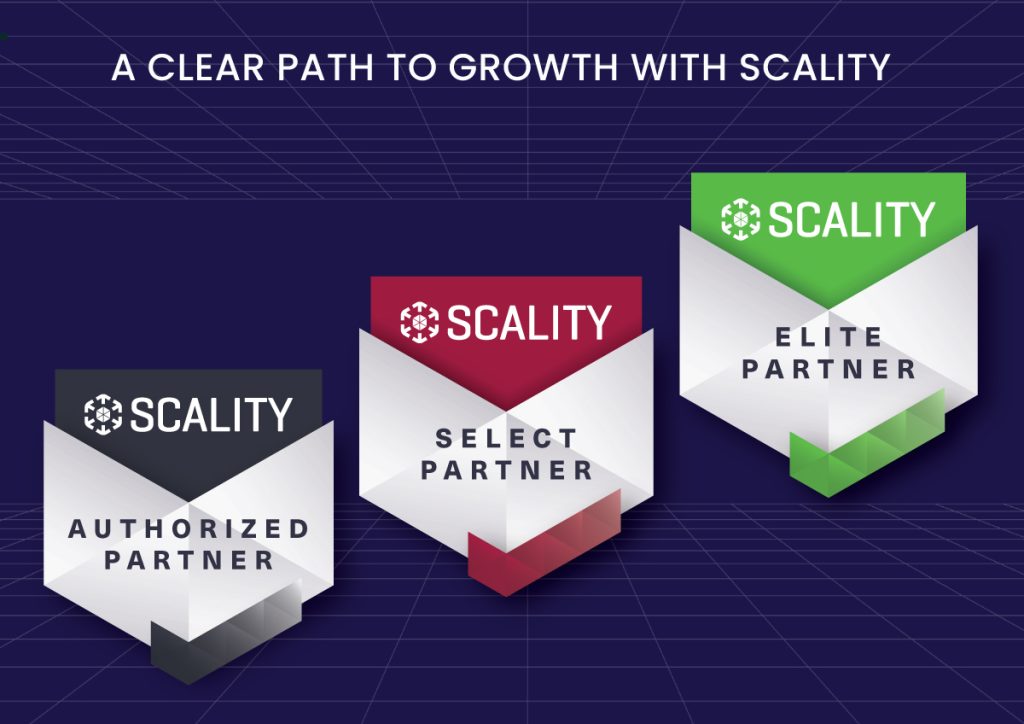
New ‘Authorized’ tier, improved margins, and expanded deal protection give partners a clearer path to grow with Scality across cyber resilience, sovereignty, and AI.
Key quote from the press release:
“The Scality partner program is designed to reward what truly generates long-term success: technical excellence, solution expertise, and proactive market engagement—not just signed contracts. Partners who build pipelines, educate their customers, and develop the Scality footprint are those who capture the most value in this program. And in the sovereign and AI markets, across EMEA, the Americas, and APAC, it is precisely this type of partner that makes the difference.” — Eric LeBlanc, ARTESCA GM and channel chief, Scality
10ZiG launches Fusion Channel Partner Program to help partners capitalize on endpoint modernization opportunities

New program delivers sales, technical, and enablement resources to help partners simplify endpoint management, address endpoint security and combat hardware refresh challenges.
Key quote from the press release:
“The endpoint landscape is evolving rapidly. Organizations are looking for ways to improve security, reduce the financial impact of large-scale hardware refreshes, and simplify endpoint management across increasingly distributed environments. The 10ZiG Fusion Channel Partner Program is designed to help our partners lead those conversations and build successful practices around secure endpoint modernization.
We’re investing in resources, tools, and support that make it easier for partners to win business, accelerate deployments, and deliver long-term value to customers.” — Stuart Pladgeman, vice president of sales, 10ZiG Technology
ShareGate MCP Brings Microsoft 365 Governance Into Claude, ChatGPT and Copilot for IT Professionals
It surfaces oversharing risks, runs AI-readiness checks, and lets IT pros act on valuable insights, all in the same chat.
Key quote from the press release:
“Governance has never lived in one place because nothing was ever built to hold it. AI tools just became another admin center IT had to open to answer one question. With ShareGate MCP, we made a different bet: collapse the work into the tool you’re already in.” — Benjamin Niaulin, VP of product, ShareGate
N-able launches shadow AI visibility across unified endpoint management and security operations
New capabilities deliver identity-attributed visibility into AI tool usage across endpoints and networks, without additional agents or infrastructure.
Key quote from the press release:
“Organizations are embracing AI at an unprecedented pace, but many IT and security teams are struggling to answer a basic question: what AI tools are actually being used across their environment? Shadow AI Visibility helps close that gap by providing actionable transparency into AI usage across endpoints and networks. Before organizations can govern AI, they need to understand where it’s being used. This capability gives customers the foundation they need to make informed decisions around security, compliance, and responsible AI adoption.” — Nicole Reineke, chief AI officer, N-able
Only 31% of organizations have visibility into AI software as spend surges, Flexera 2026 State of ITAM Report reveals
Report finds IT asset visibility is declining as AI, SaaS and cloud complexity increase, creating new cost pressures and governance challenges.
Key findings from the report include:
- Complete IT asset visibility dropped to 36%, down 7 percentage points year over year, reflecting growing complexity across AI, SaaS and cloud environments.
- Only 31% of organizations have visibility into AI software as AI-related spending continues to grow.
- 59% of organizations report increased AI waste as adoption grows, reflecting rapid experimentation without mature governance.
- Daily interaction between ITAM and FinOps teams declined slightly year over year, while reporting alignment increased by 5%.
Lenovo redefines enterprise AI economics with agentic AI and inferencing innovations
The newly expanded Lenovo Hybrid AI Advantage™ includes a portfolio designed to help customers improve AI economics, accelerate deployment, and optimize performance, governance, and cost across hybrid environments.
Key quote from the press release:
“As captured by the Lenovo CIO Playbook 2026, 94% of organizations are planning to increase their AI investment over the next year, and enterprises are moving beyond AI experimentation and demanding measurable business outcomes. Lenovo is uniquely positioned to help customers deploy AI where it creates the greatest value—while dramatically improving token economics, accelerating time-to-value, and maintaining the trust, security, and governance organizations require.” — Ashley Gorakhpurwalla, president of infrastructure solutions, Lenovo
Cequence launches Intent Graph and Biometric Check for AI agents and bot traffic
As MCP and agentic commerce go live, new capabilities deliver behavioral detection and friction-free human verification across web, mobile, API, and agentic AI channels.
Key quote from the press release:
“Client-side bot protection wasn’t architected for AI-driven traffic, and enterprises are already feeling the consequences of this as automated traffic exceeds that from humans.” — Ameya Talwalkar, CEO and co-founder, Cequence
Navigating the threat landscape of the 2026 FIFA World Cup

Flashpoint breaks down emerging threat activity, protest movements, cyber risks, and operational challenges shaping the security environment for the 2026 FIFA World Cup.
Key findings from the report include:
- Flashpoint analysts have not identified any credible indications of an imminent attack targeting tournament venues or participants, but continue to monitor risks across physical security, civil unrest, cyber threats, and geopolitical developments.
- Protest activity has expanded across host nations, including anti-FIFA coalitions, labor actions, housing advocacy movements, and the “No ICE in the Cup” campaign.
- Security concerns remain elevated around high-profile matches, fan zones, transit hubs, stadium perimeters, and other soft-target locations.
- Cybercriminal activity targeting fans remains persistent, including fraudulent domains impersonating FIFA-related services, fake ticketing portals, merchandise sites, streaming services, and employment opportunities.
Service Leadership report reveals historic growth for IT solution providers and the operational factors defining this economic shift
Annual profitability benchmark finds best-in-class IT solution providers sustained 19%+ adjusted EBITDA for a record sixth consecutive year as AI-driven automation, operational discipline, and scalable execution redefine the economics of IT solution provider growth.
Key findings from the report include:
- Best-in-class IT solution providers achieved 19%+ adjusted EBITDA profitability for the sixth consecutive year, the longest run in industry history.
- Business valuations and valuation multiples for best-in-class IT solution providers reached record highs in 2025.
- For the average IT solution provider, stronger revenue and profitability growth contributed to an approximate 15% increase in enterprise value from 2024.
- Managed service providers saw total revenue growth rebound to 9.6%, up from 7.1% in the prior year, while adjusted EBITDA grew 17.1%.
- Value-added resellers grew revenue 8.9% in 2025, compared with 1.8% in the prior year, while maintaining adjusted EBITDA dollar growth of 17.0%.
Netwrix unveils new AI governance capabilities for hybrid Microsoft environments
Netwrix 1Secure SaaS platform now offers Agentic AI to secure data, identities and Copilot rollouts, providing insights within an hour.
Key quote from the press release:
“Organizations where AI expanded the identity footprint saw four times the breach rate of those where it didn’t — 43% versus 11%. The problem is speed. AI adds identities and accesses data at a much faster pace than human reviews can keep up, and attackers move in seconds. Netwrix 1Secure uses AI to help IT and security teams monitor changes across their environments, identify and fix issues faster, and prove compliance to auditors.” — Grady Summers, CEO, Netwrix
Brinqa launches BYOAI to let security teams use any AI on their own exposure data
Trusted exposure intelligence is now democratized across every team, every workflow, and every AI platform.
Key quote from the press release:
“AI is rapidly becoming the interface through which teams make decisions and take action. Organizations today have no shortage of AI options. What determines whether those systems create real value is the quality of the intelligence they run on. BYOAI allows organizations to use the models and platforms that work best for them while grounding every decision in a curated, correlated view of their exposure landscape. That’s how AI creates real business value.” — Dan Pagel, CEO, Brinqa
ExtraHop report finds nearly half of ransomware victims suffer data theft before detection

New Global Threat Landscape Report finds AI-driven threats are moving faster while enterprises continue to face prolonged dwell times, alert noise and manual security operations.
Key findings from the report include:
- 55% of respondents cited AI agents, agentic infrastructure and GenAI applications as the attack surfaces representing the biggest cybersecurity risk to their organization.
- 85% of respondents identified security incidents, data exposures or near misses where the root cause was an AI system.
- Adversaries had access to enterprise networks for nearly 2.5 weeks on average before being detected in ransomware incidents.
- 49% of organizations did not detect the threat until after data was stolen, up from 31% last year.
M-Files expands agentic AI capabilities with new agents that deliver context-aware automation
New M-Files Agents go beyond retrieval, delivering governed, context-aware decisions, actions, and outcomes.
Key quote from the press release:
“M-Files serves as the trusted system of record for enterprise content, transforming documents into governed, context-rich knowledge delivered through our enterprise knowledge graph. As organizations move from AI-assisted work to agentic workflows, trust becomes essential. This latest M-Files agentic release extends beyond information retrieval, enabling AI to take intelligent actions and automate processes while maintaining the transparency, governance, and control enterprises need to scale enterprise AI with confidence.” — Tony Grout, chief product officer, M-Files
As ChannelPro’s online director and tech editor for over a decade, Matt Whitlock has spent years blending sharp tech insight with digital know-how. He brings more than 25 years’ experience working in the technology industry to his reviews, analysis, and general musings about all things gadget and gear.
Images: SuperOps/Guardz, Mysterium, Vasion, Flashpoint, Scality, 10Zig, ExtraHop