
Between managing complex IT environments, keeping customers secure and figuring out where AI fits into the picture, MSPs have a lot on their plates. With customers watching their budgets, simply adding more tools or hiring more technicians isn’t always the best or most viable option.
Fortunately, technology providers are finding new ways to help MSPs tackle these challenges without adding unnecessary complexity.
At MSP Summit in Orlando, Florida, six vendors shared how they’re addressing familiar pain points. The opportunities range from cleaning up Microsoft 365 environments and controlling cloud spending to automating security operations and helping customers adopt AI safely.
Their solutions differ, but the underlying message is consistent. MSPs can improve efficiency, strengthen customer relationships and uncover new revenue streams by addressing problems that often get overlooked.
Turning neglected IT work into business value
Former MSP operator Dan Brinkmann saw the problem firsthand. MSPs have maintenance tasks that should get done but never make it to the top of the priority list. Cleaning up Microsoft 365 environments is a perfect example.

Dan Brinkmann
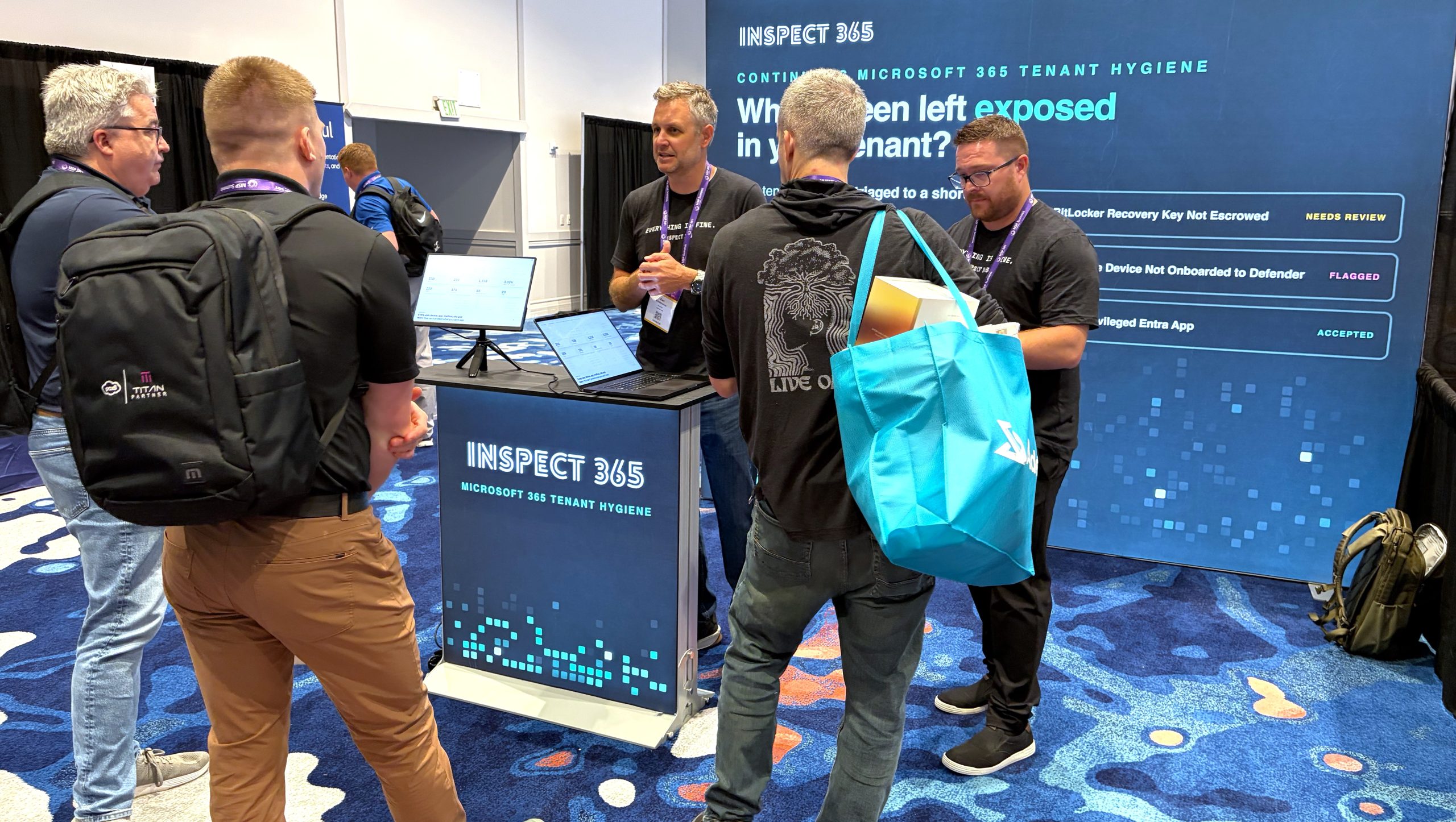
So, Brinkmann founded Inspect 365 earlier this year to help providers manage Microsoft 365 tenant hygiene.
As employees join and leave organizations, they leave behind devices, applications, shared mailboxes and permissions. Those leftovers can create security exposure, unnecessary licensing costs and administrative work.
The problem is more widespread than many MSPs care to admit, Brinkmann admitted. “From the people that I’ve talked to, and maybe it hurts to say it out loud, but people aren’t doing anything about it. They’re just living with it. It’s work that they don’t have time to do and it’s annoying.”
Inspect 365 brings information from different Microsoft environments together, giving technicians a more complete picture of users, devices, permissions and vulnerabilities. Its AI capabilities also help technicians identify issues that need attention.

Cindy Grogan
Visibility is also central to Flexera‘s approach, although its focus extends across software licensing, hardware assets, cloud spending and SaaS management. The company’s tools can help MSPs identify underused resources and potential savings, said Cindy Grogan, general manager and vice president, Flexera solutions.
Just as important, those insights can give providers new reasons to engage customers.
“I’ve been in the world of partners forever, and one of the things I know for a fact is that when you are an MSP under contract, you’re looking for the next reason to get renewed,” she explained. “You’re always looking for something a little bit different, more secret sauce, something that takes them away from looking at a competitor to take your contract.”
Identifying wasted spending or aging technology can open the door to conversations about optimization, upgrades and long-term planning. That’s more valuable than simply delivering another inventory report.
Making cybersecurity more manageable
Cybersecurity is one of the toughest areas for MSPs to manage, particularly those without dedicated security teams.

Ryan Grant
ESET is addressing that challenge by combining multiple security capabilities into a single offering. Ryan Grant, the company’s country manager and general manager for North America, described a package that includes managed detection and response (MDR), vulnerability and patch management, multifactor authentication (MFA), cloud protection, premium support and a cyber warranty.
The idea is to reduce tool sprawl and give MSPs more time to advise customers rather than constantly respond to threats.
“The threats are growing nonstop,” Grant said. “This just simplifies the way to procure, leverage and deploy the technology. It allows an MSP to be far less reactive and more proactive because they’ve got the technology behind it, including the AI, with the monitoring. It puts MSPs in a better position to advise their clients versus having to take on the liability and the risk of worrying about, ‘This threat is coming in.'”
Meanwhile, Tier4 AI approaches the challenge from another angle. The company offers an AI-driven MDR platform that brings enterprise-grade protection within reach of smaller businesses.

Marvin Wheeler
Co-founder Marvin Wheeler said the company concentrates on endpoint detection and response (EDR), identity and email alerts rather than incorporating every possible security data source. That narrower focus helps control costs while automating threat remediation.
For MSPs that can’t afford a round-the-clock security operations center, Wheeler sees an opportunity to deliver continuous protection without dramatically increasing staffing. He also emphasized safeguards that keep AI-generated recommendations from directly controlling remediation tools.
“The platform becomes their 24/7 eyes on glass,” he noted. “We have checks and balances on both ends: first, on what we ask and when it comes back, what we do.”
Keeping MSPs in the AI conversation
Customers aren’t waiting for their MSPs before adopting AI. Employees are experimenting with chatbots, connecting AI tools to business systems and sharing information through applications that IT teams may not even know exist.

Emily Hock
That was the genesis behind KIPIO‘s AI security and governance platform. It gives MSPs visibility into how customers use AI across browsers, desktops and agents. The platform also helps providers enforce policies that restrict unauthorized applications and sensitive data sharing, according to KIPIO Co-founder and CEO Emily Hock.
“We saw that MSPs were outside of the room of AI and no longer included in the conversation. People were adopting tools outside of their oversight and control, and then putting in anything that they wanted to — even connecting it to systems that the MSP was responsible for monitoring.”
KIPIO’s tool gives MSPs a seat at that table. The opportunity goes beyond preventing risky behavior. Understanding which tools employees use and where adoption is falling short can help MSPs recommend training, improve workflows and identify additional services.
Expanding services without building everything yourself
Not every customer requirement calls for another full-time employee or a new internal practice.
Penetration testing is one example. Customers may need testing to satisfy compliance requirements, meet contractual obligations or qualify for new business. But MSPs often don’t have the specialized expertise to perform those tests themselves.

Matthew Sprague
WorkNest provides penetration testing, vulnerability scanning and compliance-related services through direct and channel relationships.
Matthew Sprague, the company’s head of sales, said MSPs can refer customers, resell services or work with the company on co-branded engagements. WorkNest handles the technical work, including scoping, testing and reporting. And those opportunities aren’t limited to large businesses.
“The reality is it’s not necessarily the size, it’s why they need it. For example, when companies do get larger, they’re going to test more often because they’re trying to satisfy some regulatory compliance or they have customers that are requiring them to test.”
Sprague recalled a three-person law firm that needed penetration testing to qualify for a significant corporate case. It’s a reminder that even small customers can have sophisticated security requirements.
Finding the opportunity in everyday challenges
Taken together, these conversations highlight an important opportunity for MSPs. Growth doesn’t necessarily require selling more products or building every capability internally. It can come from solving more of the problems customers already have.
Whether it’s reducing administrative overhead, expanding security coverage, improving AI governance or delivering specialized services through partners, MSPs have more ways to create value without taking on every burden themselves.
For providers looking to grow while protecting margins, that’s an opportunity worth exploring.
5 opportunities MSPs shouldn’t overlook
Everyday customer challenges can create opportunities to improve service delivery, strengthen relationships and generate additional revenue.
- Audit Microsoft 365 environments.
Look for inactive users, unnecessary licenses, outdated permissions and unmanaged devices that may be creating security risks or wasted spending. - Review software and cloud costs.
Identify unused subscriptions, aging assets and underutilized cloud resources. Use the findings to start conversations about optimization. - Evaluate security operations.
Determine whether consolidating tools or adopting automated MDR services could reduce alert fatigue and improve protection without adding staff. - Start an AI governance conversation.
Ask customers which AI tools employees are using, what information they’re sharing and whether existing policies provide sufficient oversight. - Look for specialized service opportunities.
Identify customers facing compliance requirements, contractual security obligations or penetration testing needs that could be addressed through a partner.
Ray Lyons is an account executive for ChannelPro.
Images: Anjali Fluker/ChannelPro; LinkedIn