

In the last year, conversations around cybersecurity have taken a sharp turn. It’s no longer just about basic protection, but human risk mitigation, regulatory readiness, and proof of security maturity. And MSPs are expected to lead the change.
MSPs can no longer afford to be passive on security; they need to lead.
3 Key Cybersecurity Trends Shaping MSPs’ Future
Let’s break down three of the most pressing trends shaping the future of cybersecurity and how MSPs should respond to them.
Trend 1: The Increasing Risk of Human Errors
Most breaches today stem from human behavior, whether it’s a misdirected email, a weak password, or a click on a phishing link.
According to Proofpoint’s 2024 Voice of the CISO report, 74% of chief information security officers (CISOs) identified human error as their leading cybersecurity concern. This marked a notable increase from 60% in the previous year.
Supporting this, Mimecast’s State of Human Risk Report revealed that human error played a role in 95% of data breaches. This highlights its critical impact on organizational security.
2025 High-profile Cybersecurity Incidents Caused by Human Errors
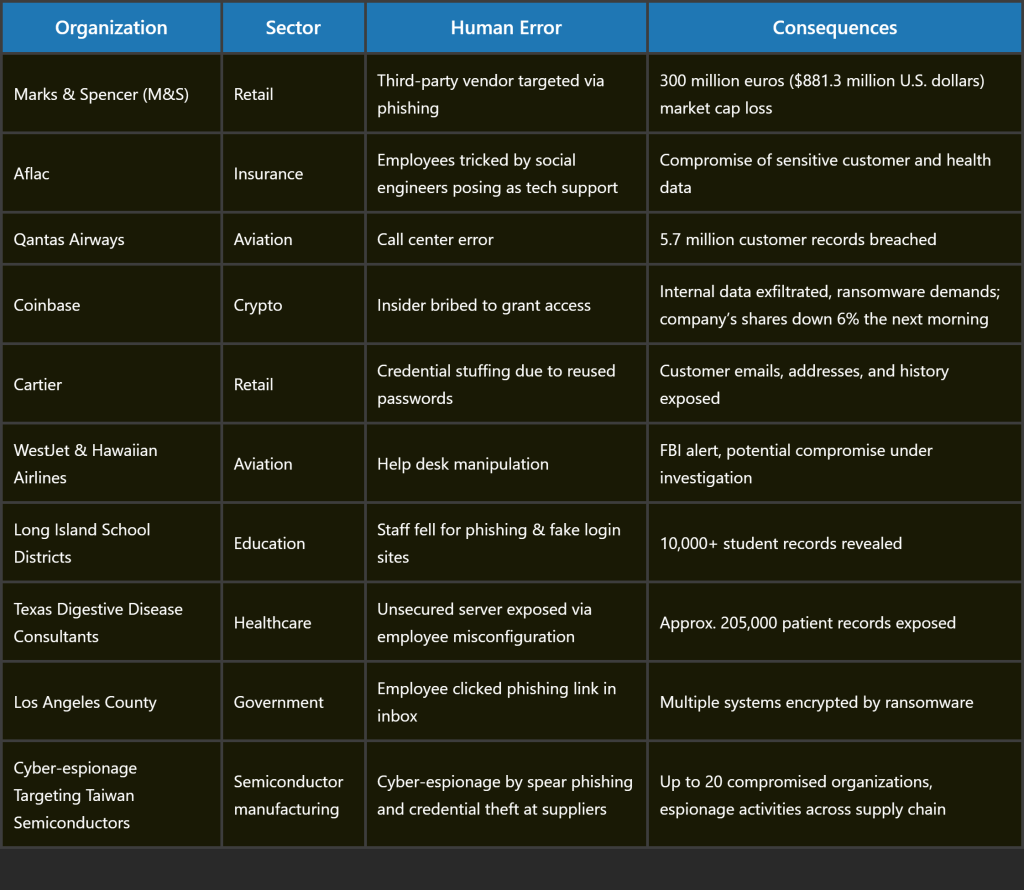
While statistics point to human error as a leading cause of cyber breaches, real-world incidents drive the point home with far greater impact. In the first half of 2025 alone, a wave of high-profile breaches across industries has already rattled global enterprises.
CREDIT: usecure
These security breaches highlight just how vulnerable even the most established organizations can be when human risk is left unmanaged, and why MSPs must take an active role in addressing it.
MSP Strategy to Reduce Human Cyber Risk for Clients
CREDIT: usecure
Human error is a leading cause of breaches. And clients know it. Rather than looking for antivirus and patch management, clients are asking: “Is our workforce adequately trained to serve as a strong defense against security threats?” They’re looking to their MSPs for support in managing this risk.
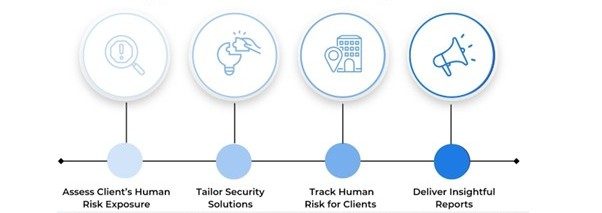
MSPs should build a portfolio of solutions to address human-related cyber risks in all aspects. Follow these strategic steps to develop a client-centric human risk management offering:
- Step 1: Assess the Client’s Human Risk Exposure: Start by conducting a baseline assessment to understand where the client’s workforce stands in terms of cybersecurity awareness and behavior. Review existing training efforts, if any.
- Step 2: Deploy Tailored Security Solutions: Once gaps are identified, deploy a user-centric solution that adapts to the employee’s role, behavior, and learning pace. It is important to choose a platform that offers automated, bite-sized content to maximize engagement. To drive real behavioral change, make training ongoing and continuous. Consistency is key to building lasting security habits across the workforce.
- Step 3: Track Human Risk for Clients Continuously: Adopt a solution that enables continuous monitoring of user risk based on their training performance. Assign risk levels to individuals, teams, or departments. Share reports with clients that clearly show risk reduction over time. Use these insights to guide future training and intervention.
- Step 4: Deliver Insightful Reports: Showcase the results of user performance in clear, customizable reports that demonstrate ROI and improvement. Include metrics like click rates, training completion, and risk score changes. Use these reports as a conversation starter during QBRs and client reviews.

Trend 2: Toughening Cyber Rules Worldwide
Across the globe, cybersecurity regulations are becoming stricter, broader, and more enforceable. Governments now expect organizations to demonstrate accountability, resilience, and proactive defense. From the EU’s NIS 2 Directive and GDPR enforcement to the US’s CIRCIA and sector-specific mandates like HIPAA and PCI DSS v4.0, compliance requirements are expanding rapidly.
Most Common Cyber Regulatory Requirements Globally
Many of the cybersecurity laws, frameworks, and standards now include people-focused requirements designed to reduce human risk and prove proactive security management. Below are some of the most common regulatory expectations MSPs and their clients must meet:
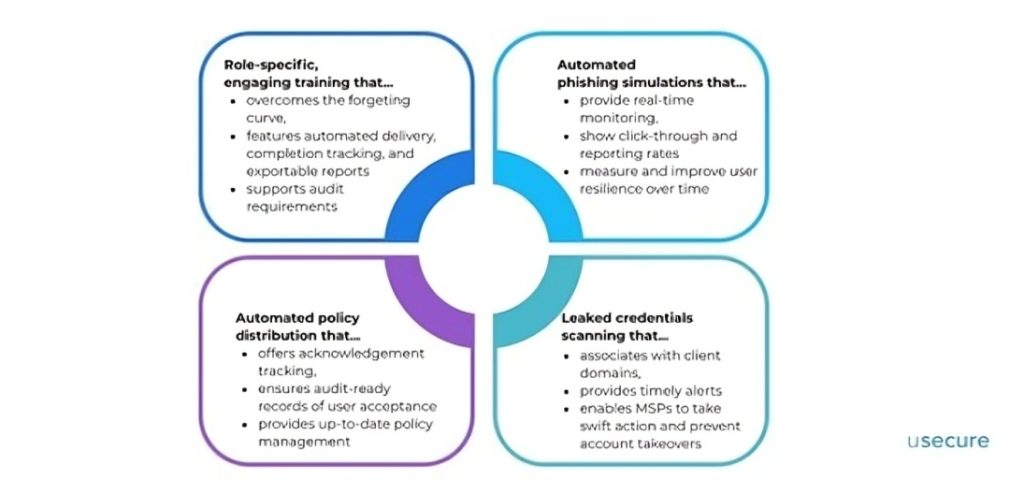
- Security Awareness Training
- Strongly required by NIS 2 (Article 20(1)), GDPR (Article 39(1)(b)), HIPAA (§164.308(a)(5)), PCI DSS v4.0 (Requirement 12.6), ISO 27001 (Annex A 6.3), DORA (Article 5 Section 2(g)), Cyber Essentials (Requirement 4) and NIST CSF 2.0 (Identify).
- Most regulations mandate that organizations provide regular, role-based security awareness training for all employees. This ensures users understand common threats like phishing, ransomware, and data mishandling.
- Phishing Preparedness and Simulation
- Strongly required by NIS 2 (Article 21 (2)(g)), PCI DSS v4.0 (Requirement 5.4), ISO 27001 (Annex A 6.3), Cyber Essentials (Requirement 5), NIST CSF 2.0 (Detect).
- Many laws and frameworks emphasize the need to simulate cyberattacks to evaluate and improve user readiness. This is especially true against phishing, one of the most common attack vectors.
- Policy Management and User Acknowledgement
- Strongly required by GDPR (Article 33), HIPAA (45 CFR §§ 164.400-414), CIRCIA (Cyber Incident Reporting Requirements), ISO 27001 (Annex A 6.8) and NIST CSF 2.0 (Protect).
- Organizations are expected to have clear policies (e.g., acceptable use, data handling, remote work) and ensure users read and acknowledge them. Lack of policy awareness is a compliance red flag.
- Breach Detection and Credential Monitoring
- Strongly required by GDPR (Article 33), HIPAA (45 CFR §§ 164.400-414), CIRCIA (Cyber Incident Reporting Requirements), ISO 27001 (Annex A 6.8) and NIST CSF 2.0 (Protect).
- Cybersecurity laws increasingly demand that organizations detect and respond to breaches swiftly. Monitoring for exposed credentials is a proactive way to reduce the risk of unauthorized access and prove incident readiness.
Key Security Solutions for MSPs
CREDIT: usecure
MSPs are increasingly seen as extensions of their clients’ security and compliance operations. Therefore, they must stay on top of legal requirements and deliver compliance-ready, people-focused solutions that align with these tightening standards.
The toughening cyber rules create both a challenge and a growth opportunity. MSPs who embed compliance into their services will stand out as strategic partners in this high-stakes environment.
Trend 3: Clients Are Demanding Proof of Credibility from Cybersecurity Vendors
Nowadays, clients are no longer content with verbal assurances or glossy product sheets. They want concrete proof that high-standard solutions in place are secure and compliant.
According to a recent CyberSmart survey of 900 MSP leaders, 77% said they’re experiencing increased scrutiny of their own businesses’ security capabilities. This means that MSPs need to choose their cybersecurity partners carefully.
It’s not enough to say your stack is secure. You must show that you’ve made deliberate, vetted choices about the vendors you use.

Yu Ling Lok
3 Essential Criteria for Vetting Cybersecurity Vendors
To meet your clients’ expectations and regulatory obligations, here’s how you can confidently select solution vendors that meet today’s security and reliability standards:
1. Prioritize Vendors with Recognized Cybersecurity Certifications
When clients demand assurance, third-party validation speaks volumes. Choose vendors who hold credible certifications such as Cyber Essentials, Cyber Essentials Plus, ISO 27001, SMB1001, etc. These certifications demonstrate a proactive and audited commitment to information security, helping you align with cybersecurity laws globally. Partnering with certified vendors gives your clients confidence in your security posture and helps protect your own business too.
2. Vet Vendors for Long-term Viability and Financial Stability
Too many cybersecurity solutions burn bright and fade fast. To ensure your investment pays off, choose vendors that are financially secure and actively growing. Look for partners with solid financial footing and a clear trajectory for growth. Indicators such as recent funding rounds, consistent revenue growth, and strategic expansions are strong signs of long-term viability.
3. Look for a Consistent Track Record of Product Development
Cyber threats evolve. So should your vendors. Select partners that consistently enhance their platforms with meaningful upgrades, new features, bug fixes, or UI tweaks. Proactive development shows a vendor’s commitment to improvement. It’s about building a platform that grows with your business and adapts to your clients’ evolving security needs.
From Passive Provider to Proactive Partner
Going into 2026, one thing is clear: Cybersecurity threats and expectations are advancing quickly. MSPs can’t afford to be reactive in their approach to risk mitigation. The good news? These challenges also present massive opportunities. MSPs who embrace their roles as proactive partners — offering human-centric solutions, compliance-aligned services, and evidence-backed credibility — will set themselves apart in a crowded market.
The market has spoken, and the MSPs that listen will thrive.
Yu Ling Lok is a cybersecurity researcher at usecure Ltd. She plays a key role in developing educational content for security awareness training and regularly shares insights on cybersecurity compliance and human risk management. Get a 14-day free trial of usecure’s products or access a library of on-demand demos to experience the modern way to reduce human cyber risk.
Images: AI generated by Copilot, usecure