
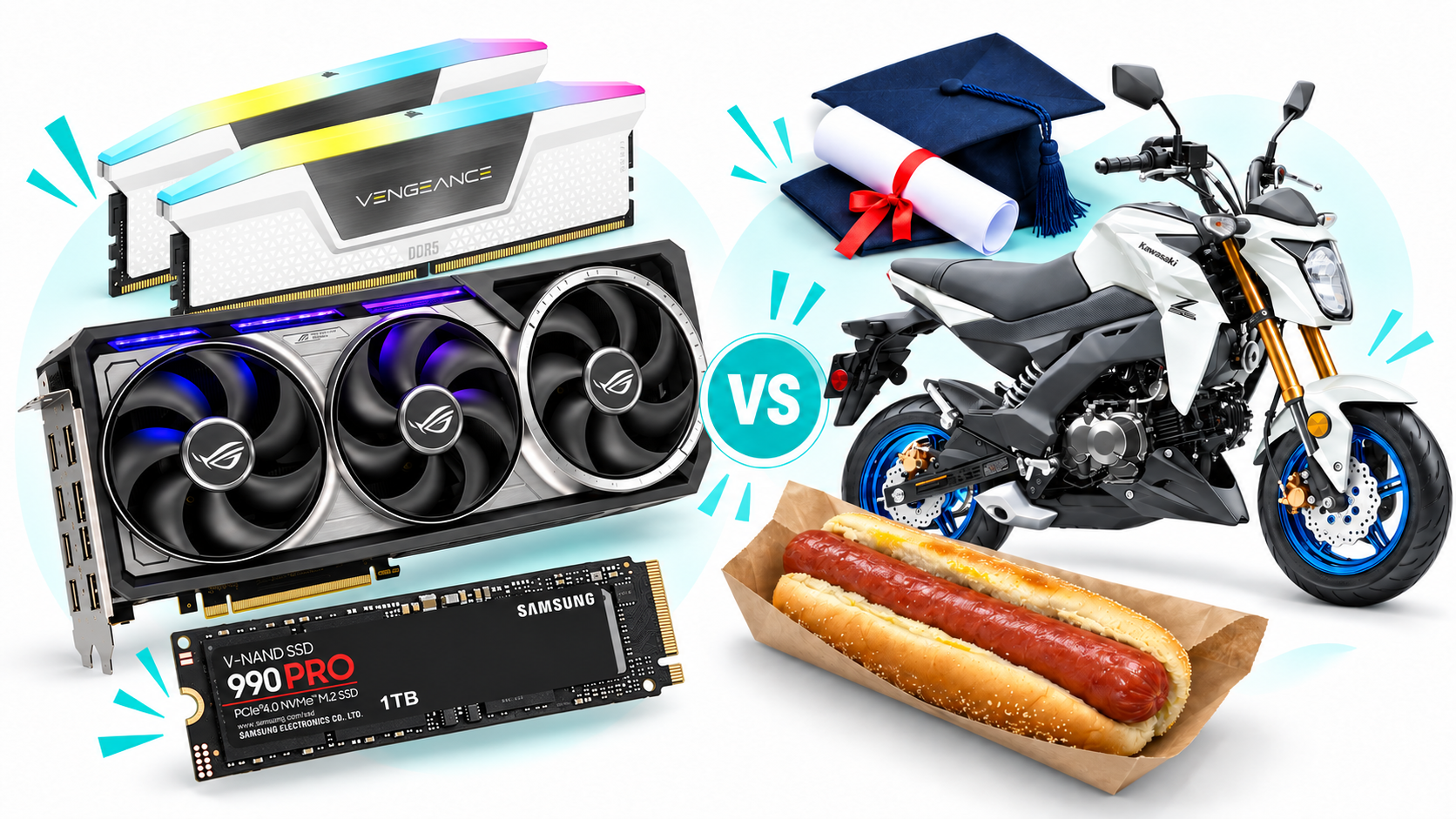
There are two ways to expand your memory: Upgrade your computer or go back to school.
Depending on the upgrade, school might be cheaper.
That sounds like the setup for a joke, but unfortunately the math checks out. With today’s soaring component prices, a 32 GB desktop memory kit can cost more than the tuition and standard fees for a three-credit community college class. Once you start looking at premium graphics cards, the alternative purchases begin to have engines.
For MSPs and IT resellers, those prices eventually become client conversations. But before you have to explain another hardware quote, let’s put a few component prices into terms that don’t require a working knowledge of DDR5.
More memory or more education?
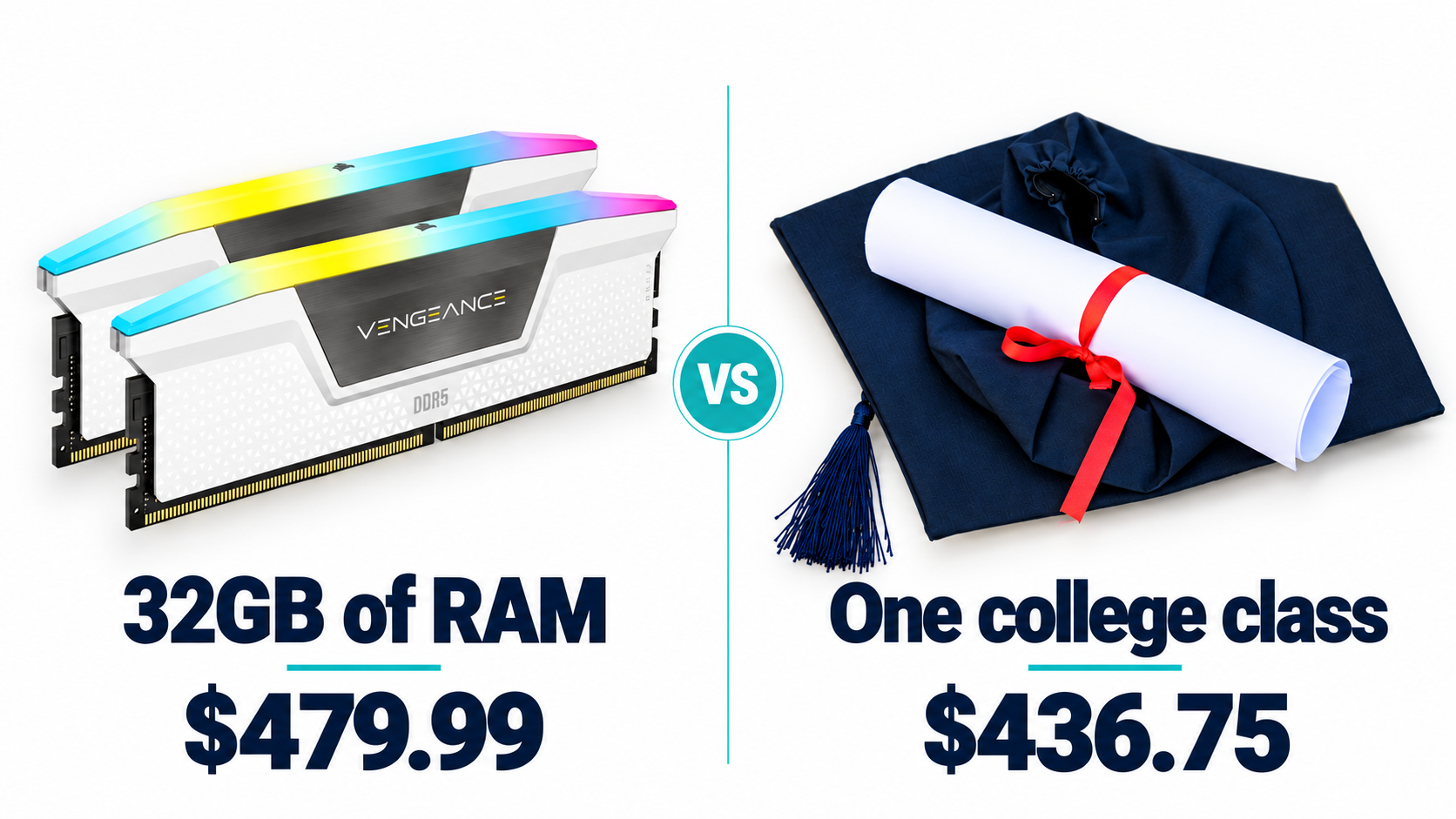
A Corsair Vengeance RGB 32 GB DDR5-6000 kit was listed at $479.99 on Newegg. It includes colorful lighting, which is thoughtful. If two sticks of RAM are going to cost that much, they should at least look like they’re ready to party with you.
At Illinois’ McHenry County College, fall 2026 in-district tuition for a three-credit class comes to $379.50. Add the standard technology and infrastructure fees plus semester registration, and the total is $436.75. Books, application fees and any course-specific charges are extra.
So, you can help your computer retain more information or pay for a class that helps a person do the same.
The RAM has one clear advantage: no homework. The class has another: It might teach you enough about economics to understand the RAM’s price tag.
More browser tabs or roughly 370 hot dogs?
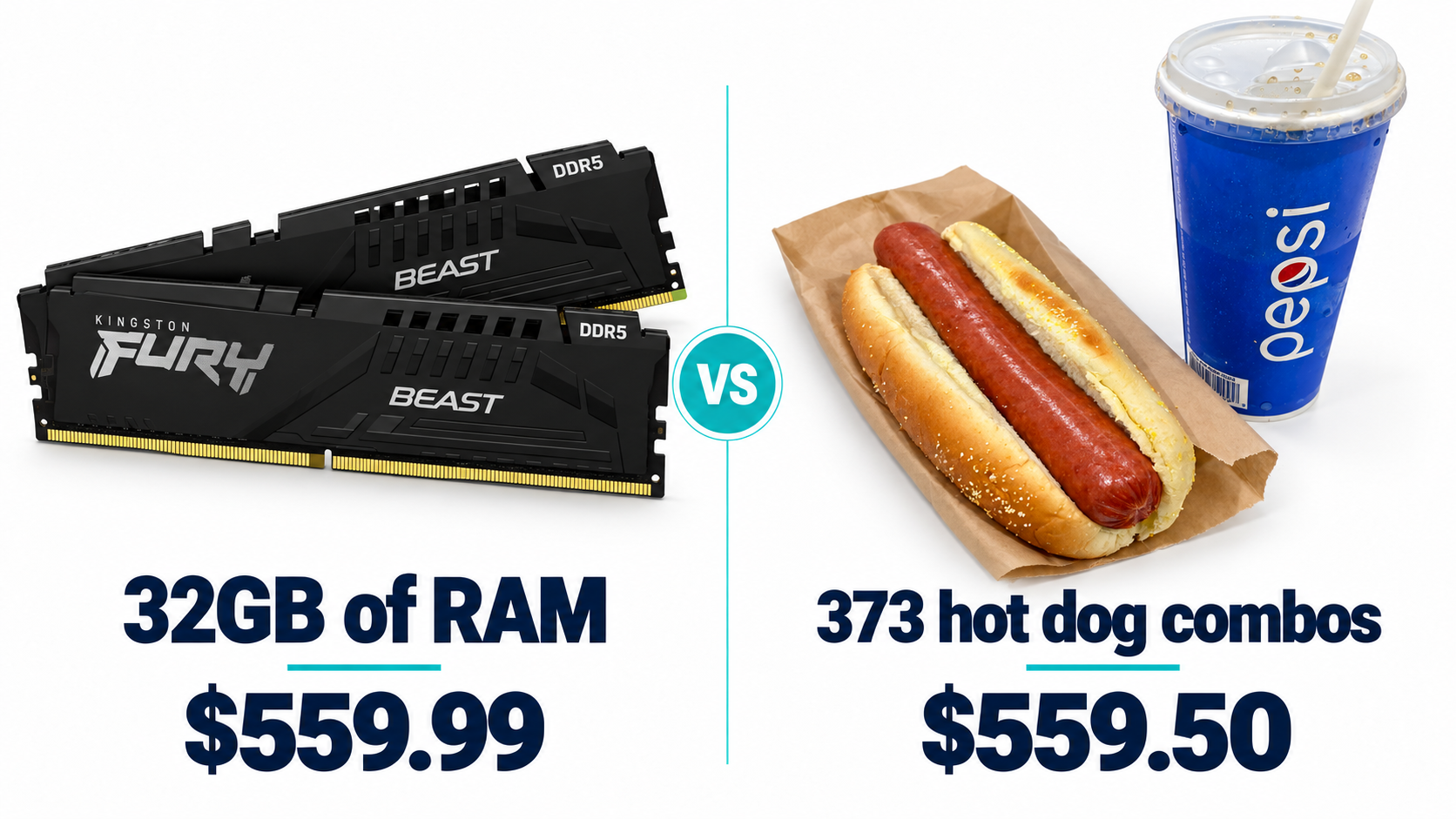
To calculate it in food terms, let’s compare Kingston’s $559.99 FURY Beast 32 GB memory kit. It is worth roughly 373 of Costco’s $1.50 hot dog combos, before tax.
For a 20-person office, that’s roughly 24 nitrate-filled lunches per employee. Alternatively, one computer gets 32 GB of RAM.
This introduces a difficult management decision. More memory could improve someone’s workday, but so could announcing that lunch is covered for the next four weeks.
The hot dogs won’t improve application performance. On the other hand, nobody has ever opened a support ticket because their lunch needed a BIOS update. I’m not suggesting that you actually replace a memory upgrade with processed meat. What I am suggesting is that “373 hot dogs” conveys the price more effectively than “two DIMMs.”
Digital storage or furniture?
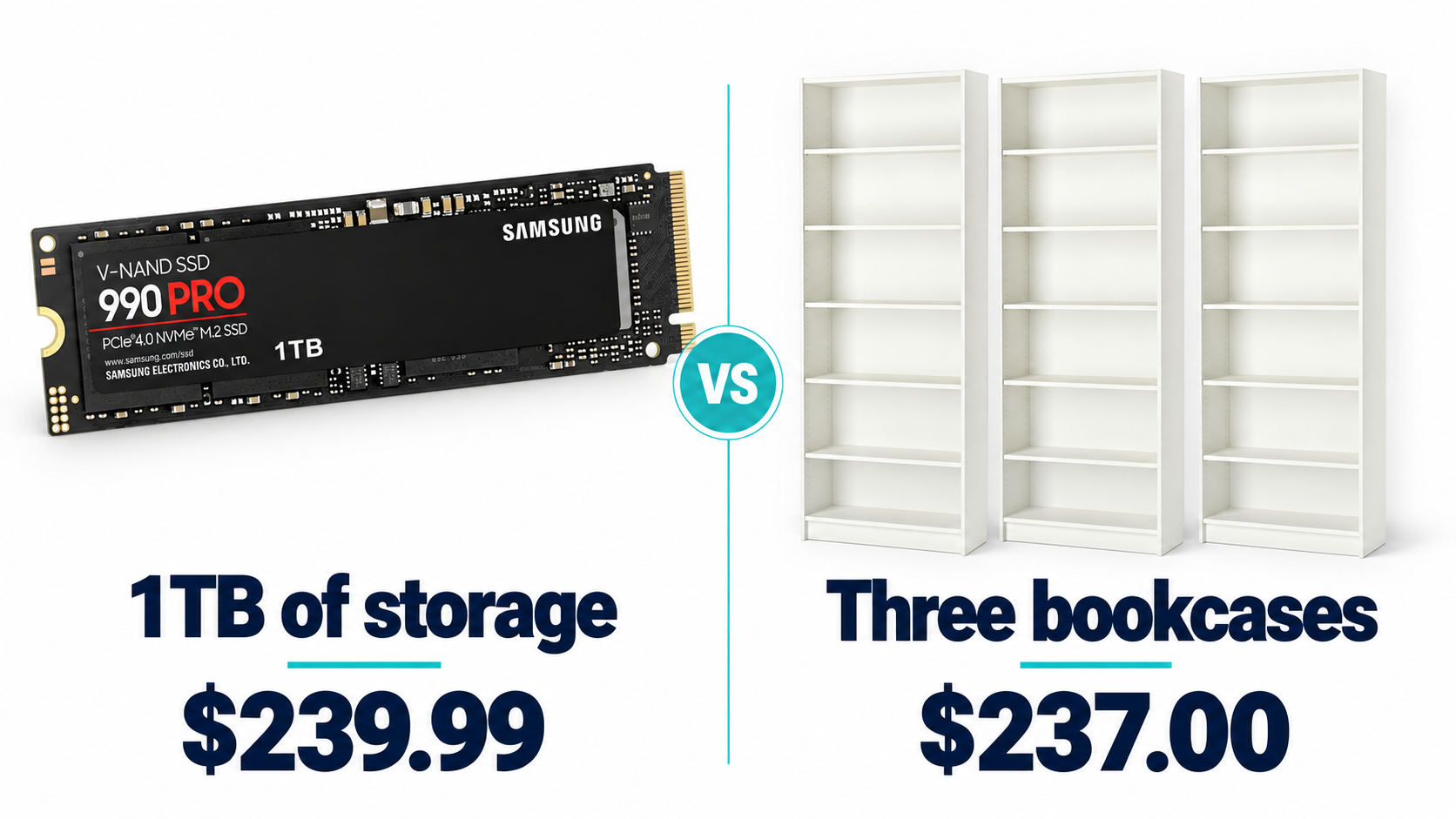
Newegg listed a Samsung 990 PRO 1 TB SSD at $239.99. IKEA listed its full-height, white BILLY bookcase at $79, with a lower price available through an in-store member offer.
At the regular listed price, three bookcases cost $237. That gives you enough physical storage to make reorganizing the office a weekend project, all for slightly less than a drive you could misplace underneath the receipt for the bookcases.
SSD is considerably better at retrieving spreadsheets. The bookcases, however, are superior at holding a printer, binders and whatever promotional merchandise the team brought home from its last conference.
Both can help with organization. Only one requires a conversation about whether the office has enough wall space.
Store the files or print the objects?
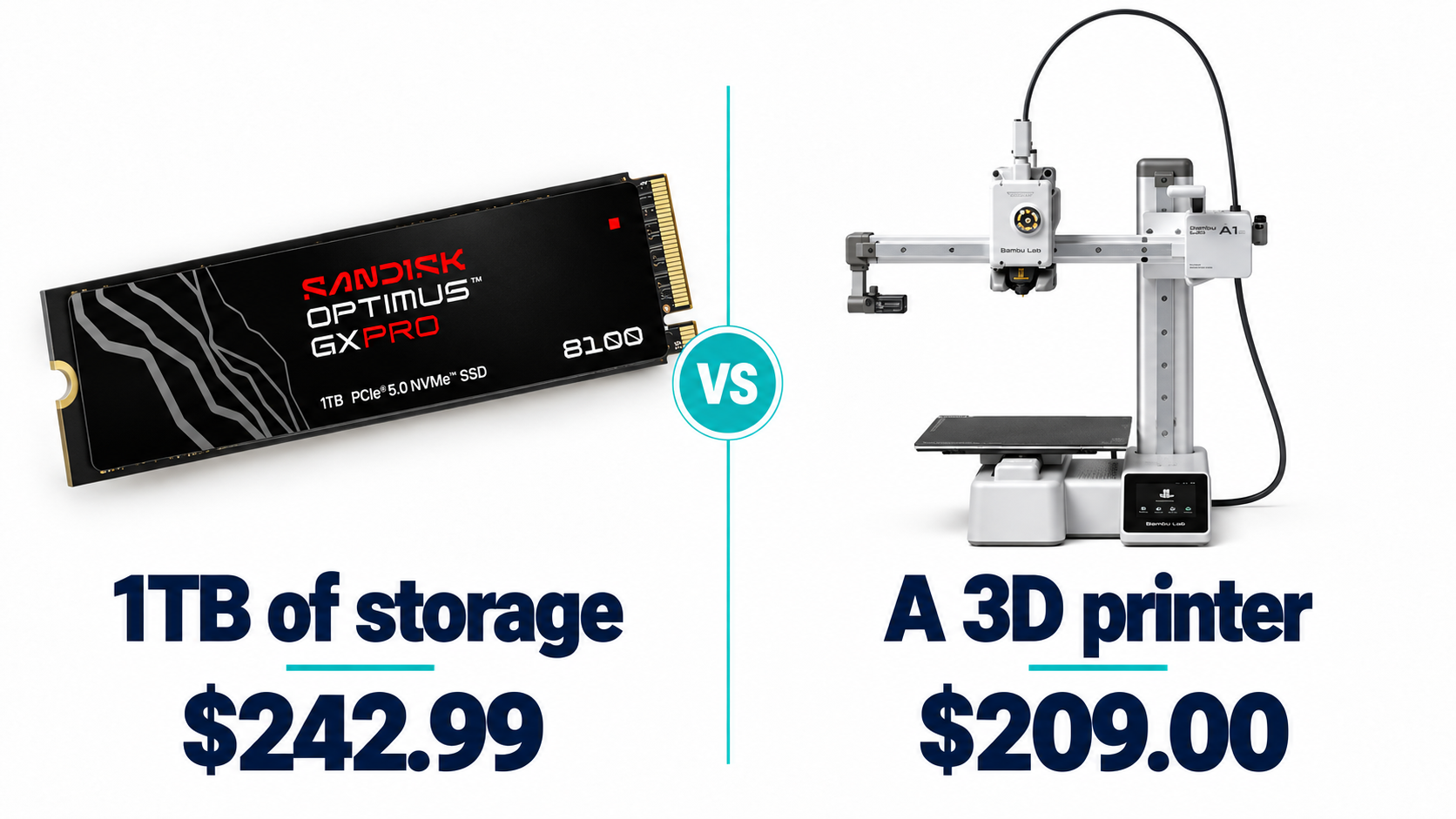
Funny in a sad-but-true kind of way, SanDisk’s Optimus GX PRO 8100 SSD can be found on sale at Newegg for $242.99. That happens to cost more than the starting price of a Bambu Lab A1 mini 3D printer, listed at $209 in the manufacturer’s U.S. store.
One purchase stores your files. The other turns suitable files into actual, physical objects.
Granted, the printer needs filament. Owning one also can lead to a sudden conviction that every problem in your house requires a custom plastic bracket. Those costs are extra.
Still, there’s something strange about comparing a complete machine with motors, a moving print head and multiple circuit boards to just one small circuit board — and discovering that the one circuit board costs more.
Sadly, you cannot 3D-print a working SSD.
Upgrade your graphics or take down the Empire?
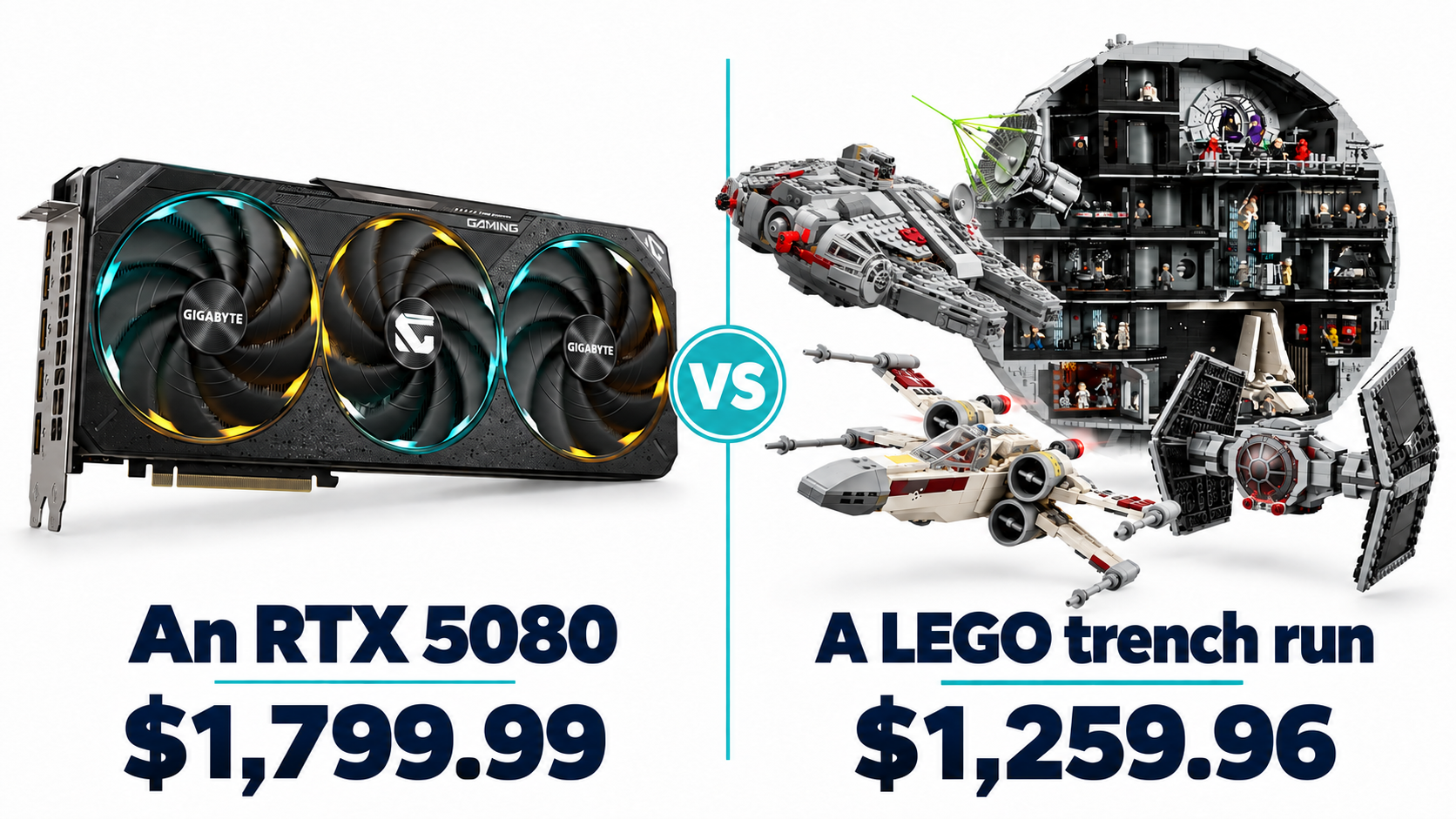
Micro Center listed a Gigabyte GeForce RTX 5080 GAMING OC graphics card at $1,799.99. That’s a substantial budget for making fictional spaceships in a Star Wars game look better on a screen.
Alternatively, LEGO’s $999.99 Death Star, $89.99 SMART Play X-wing, $69.99 Darth Vader’s TIE Fighter and $99.99 SMART Play Millennium Falcon total $1,259.96 before tax. That leaves about $540 compared with the graphics card.
There’s a difficult choice here. You can improve your computer’s graphics or stage the climactic battle from the original Star Wars on your dining room table. Luke makes his trench run, Vader closes in and Han arrives just in time to justify buying the fourth set.
Yes, the GPU is more useful for professional rendering. The LEGO collection, however, lets you provide your own sound effects.
Admittedly, spending $1,000 on a Death Star and then pretending to blow it up takes some commitment to the source material. Still, Luke saved the galaxy after turning off his targeting computer. At these component prices, I understand.
A faster computer or an actual motorcycle?
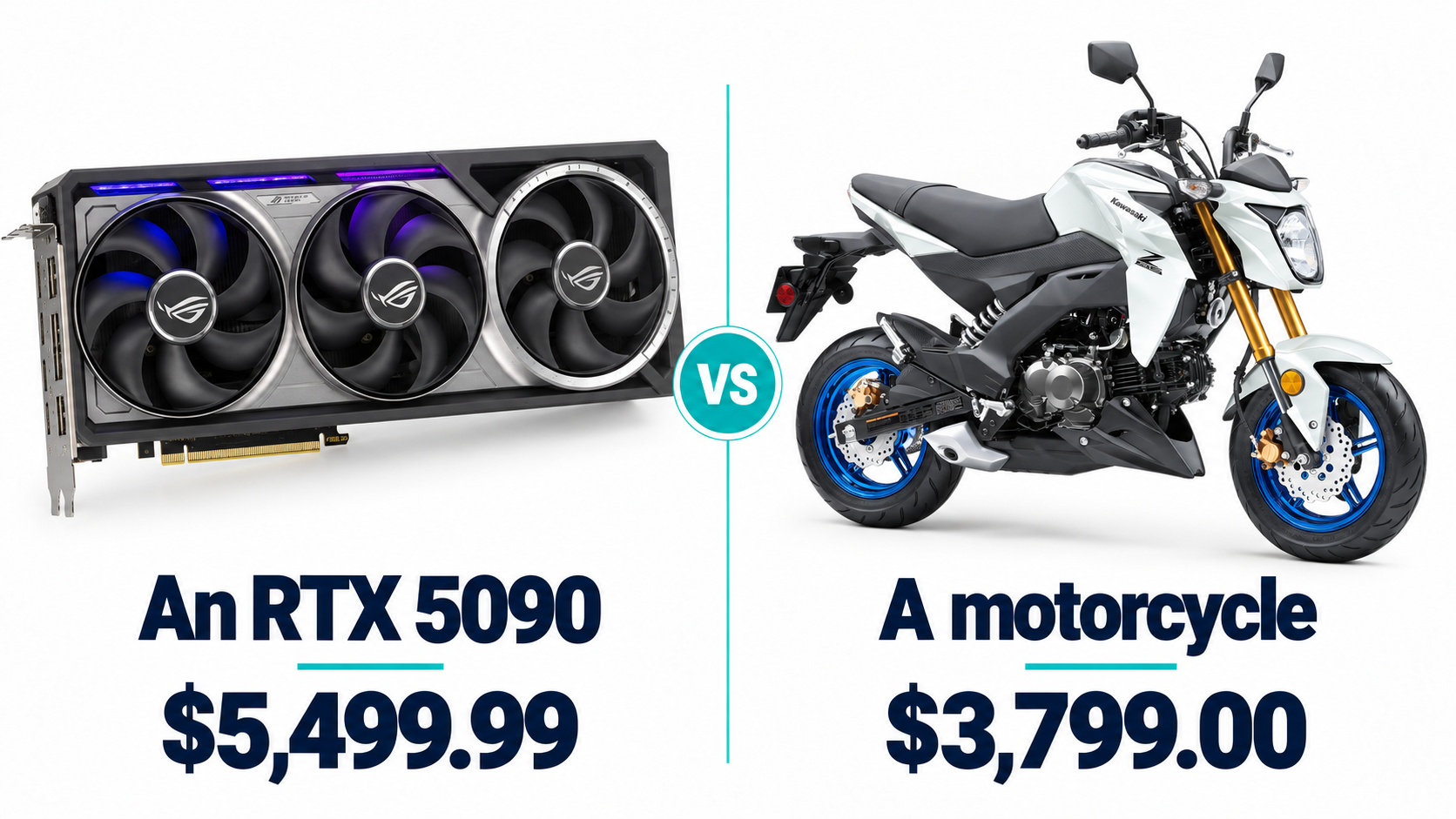
Micro Center also listed an ASUS ROG Astral GeForce RTX 5090 OC at $5,499.99. Kawasaki announced a starting MSRP of $3,799 for its 2026 Z125 PRO motorcycle.
The bike’s MSRP excludes destination and other applicable charges, so it is not an out-the-door quote. It still makes for a remarkable comparison to today’s inflated component prices. A premium graphics card carries a higher price tag than a complete small motorcycle’s base MSRP.
The GPU can help you create a more convincing virtual world. The motorcycle lets you visit the existing one.
Coincidentally, both purchases involve high performance, cooling and a potentially awkward budget discussion. Only one comes with handlebars, though.
If your graphics card budget has reached the point where you’re cross-shopping vehicles, it may be time to close the shopping tab and take a walk instead.
The part MSPs actually have to explain
A bookcase cannot run a database, and hot dogs are a poor substitute for RAM. Businesses still need hardware that can do the job.
These comparisons illustrate why an upgrade quote can need more explanation than it once did. Show the client which bottleneck you’re solving, what improvement to expect and which alternatives make sense.
Check the complete-system price too, rather than assuming an upgrade will be the better value. Then recheck component prices before ordering.
If the numbers have changed, we recommend recalculating in dollars. The hot dog conversion is strictly for internal use.
Price note: Comparisons use specific listed products and prices were accurate at the time of publication. Taxes, shipping, optional discounts and accessories are excluded unless stated. Costco membership is assumed because their rotisserie chicken is legendary. Retail listings do not establish a market average or guaranteed availability. Motorcycle pricing is base MSRP.
As ChannelPro’s online director and tech editor for over a decade, Matt Whitlock has spent years blending sharp tech insight with digital know-how. He brings more than 25 years’ experience working in the technology industry to his reviews, analysis, and general musings about all things gadget and gear.
Images: Corsair; Kingston; Deans Charbal, adapted under CC BY-SA 4.0; Samsung; IKEA; Sandisk; Bambu Lab; Gigabyte; LEGO; ASUS; Kawasaki