
Artificial intelligence is no longer a distant trend. It’s a present-day force reshaping managed services. For MSPs and MSSPs, AI tools represent a massive opportunity to scale service capacity, improve operational efficiency, and grow revenue in ways that simply weren’t possible before.
But it also comes with a learning curve: Not every tool delivers value, nor does every deployment result in ROI.
In the channel, the question is no longer whether to adopt AI. Rather, it’s how to prioritize the right tools and integrate them into the business model so they reduce friction instead of creating it.
The Pressure on MSPs
MSPs are caught in a tightening vice. Escalating customer expectations, talent shortages, and the constant grind of low-margin, repetitive tasks eat away profitability. At the same time, customers are asking providers to act as trusted advisors, delivering both advanced security outcomes and business insight.
The good news is that AI is already proving its ability to replace time-sucking processes and amplify human capacity. Partners who take a measured, intentional approach to adoption will be the ones who win.
5 AI Tools for MSPs Success
Here are five categories of AI-enabled tools that are already changing the economics of managed services:
1. Ticketing and Triage Automation
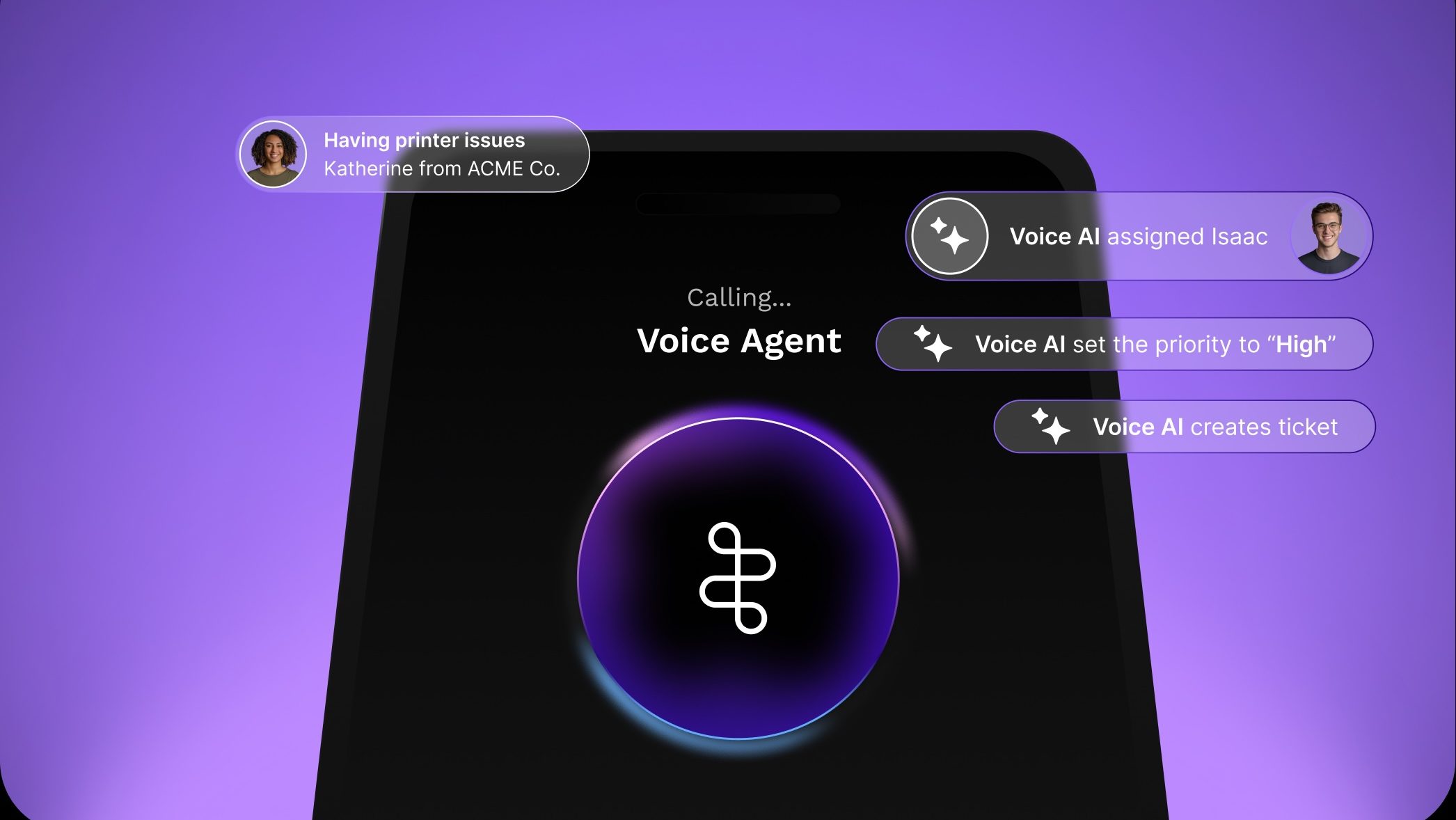
Repetitive tasks like logging, routing, and prioritizing tickets drain engineering time and delay response. AI-powered ticketing systems can classify urgency against SLAs, automate initial responses, and ensure technicians focus on what truly matters. The result: fewer bottlenecks, faster time-to-resolution, and seamless integration with your PSA/RMM stack so you’re not creating a silo.
2. Intelligent Password, Patch Management, and Knowledge Base Documentation
AI-driven automation can streamline two of the most frequent IT maintenance tasks, secure password resets and patch deployment, while significantly reducing the time burden on IT staff. When implemented within a governance framework that includes strong identity controls and auditability, AI can verify users, enforce policy-based credential resets, and prioritize patching based on risk.
When it comes to patch management, safe rollout models, such as staged or tiered/phased deployments, allow patches to be tested before organization-wide release, minimizing downtime and compatibility failures. This approach accelerates remediation timelines, strengthens security posture, and improves compliance without sacrificing control or oversight.
Documenting passwords and patch management, amongst other things, is also a huge bottleneck, and implementing documentation workflows can help streamline operations and create repeatable tasks.
3. Customer Engagement and vCISO Services
AI companions are emerging as force multipliers for customer conversations. From summarizing calls and generating proposals in real time, to scaling virtual CISO (vCISO) offerings with compliance reporting and risk analysis, AI makes higher-value services more accessible to customers — and more profitable for MSPs. This provides customer-facing insights and a level of business intelligence on win/loss, integrates with your defined service offerings, and enables customers to see real-time, executive friendly dashboards to demonstrate your value whenever the customer wants.
4. First-line Support Assistants
AI needs to be implemented within a governance framework that includes strong identity controls and auditability. In that environment, chatbots and natural language voice-driven AI interfaces can handle basic customer requests, from “unlock my account” and “check backup status” to answering an email or guiding customers on a support call.

Scott Barlow
This doesn’t replace human expertise; instead, it frees engineers from repetitive queries and improves customer satisfaction by providing immediate responses. It also provides analytics to measure effectiveness and customer satisfaction (CSAT) scores to drive response improvements.
5. Anomaly Detection and Log Normalization
Security depends on visibility. AI-driven log analysis can normalize data across vendors, highlight anomalies, and identify risks far faster than humans can. This allows providers to focus on strategic decision-making instead of sifting through endless telemetry.
The Roadmap for MSPs: Measured Adoption
AI has immense potential, but success depends on execution. Too many providers are tempted to “buy and hope.” They invest in shiny tools without a plan. Instead, MSPs should follow a measured roadmap:
- Start Internally: Pilot any tool internally first. Use it for ticketing, reporting, or patching before offering it to customers. This lets you test ROI and refine workflows.
- Leverage Peer Groups: Learn from fellow MSPs in peer forums. The channel community is a powerful filter for what’s practical and what’s hype.
- Operationalize Automation: Don’t stop at proof-of-concept. Build AI into your standard operating procedures and ensure it reduces technician workload, not adds to it.
- Differentiate with Packaging: Once proven, fold AI capabilities into your services as differentiators, from faster SLAs to expanded compliance reporting. Customers will pay for speed, accuracy, and peace of mind.
Avoid the Pitfalls
AI adoption isn’t risk-free. Common mistakes MSPs need to be prepared for include:
- Over-automation: Not every task should be delegated to AI. Human oversight is critical in high-risk or complex scenarios.
- Tool Sprawl: Adding too many point solutions creates management overhead and erodes efficiency.
- Neglecting Training: Technicians must be trained to work with AI tools, not around them.
The goal isn’t to replace people, but to augment human capability. This helps make technicians more effective and frees them for higher-value customer engagement.
Why It Matters Now
Customers are increasingly asking MSPs how they are leveraging AI. That curiosity is both a risk and an opportunity.
- The risk is being left behind by competitors who can offer faster, more scalable services.
- The opportunity is to lead with confidence, positioning your business as forward-looking and value driven.
AI won’t replace MSPs. But MSPs who master AI will replace those who don’t.
Final Thoughts: AI is Evolution
The channel has always thrived on transformation, from hardware resale to managed services to managed security and advisory services. AI is simply the next step in that evolution.
By focusing on ticketing automation, secure password resets and patch deployment, customer engagement, first-line support, and anomaly detection, MSPs can unlock efficiency and new revenue streams while providing superior protection for customers.
The path forward is clear. Take a measured approach, operationalize what works, and let AI be the lever that scales your business.
Scott Barlow is chief evangelist and global head of community for Sophos.
Featured image: AI generated by Copilot