

In this article, IT security professionals will gather professional insight into:
- SOC 2 background and rationale
- Threat and breach trends in the IT security environment
- What to look for in an MSP vendor
- How SOC 2 can be a business differentiator
The case for SOC 2 certification and compliance
In today’s business world, there is a common misperception that IT security and regulatory compliance are budget mandatories that can be implemented and then set on autopilot.
But what if there was a new level of prevention that minimized risk to acceptable levels and created growth opportunities for businesses?
System Organization and Control 2 (SOC 2) certification and compliance changes the game on IT security and regulatory compliance. This helps midmarket businesses focus on growth, not damage control and recovery.
Threat awareness protects clients
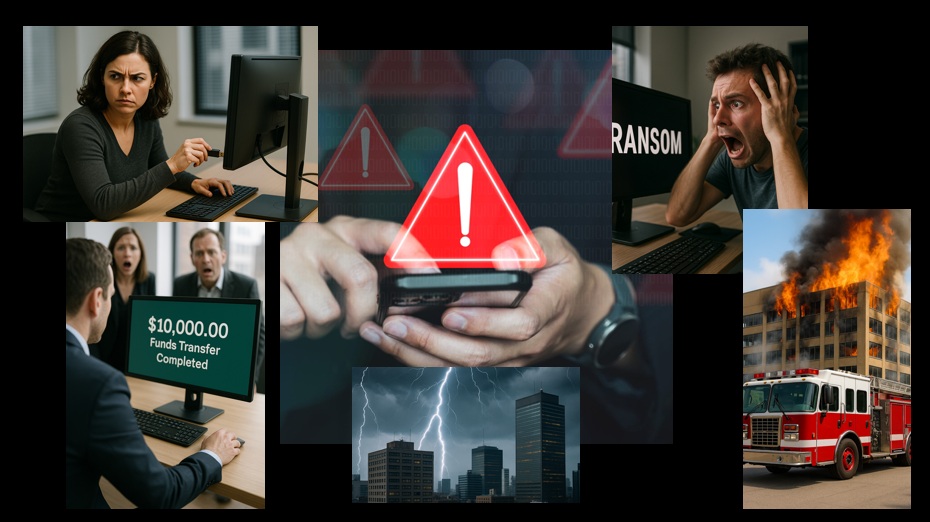
In the cybersecurity world, MSPs have become primary cyber targets because they are a gateway into so many client environments. In fact, according to CyberSmart’s 2025 report, almost 70% of MSPs had experienced a breach in the previous 12 months.
Service providers must operate at a higher security standard than their clients because a breach at the MSP level can affect multiple organizations.
When formulating a search strategy, consider the following changes to the data security landscape:
1. Third‑party risk is surging
- Verizon’s 2025 Data Breach Investigations Report, which analyzed 22,052 incidents and 12,195 breaches, found that third-party involvement doubled to roughly 30%.
- The most common initial access vectors were stolen credentials (22%) and exploited vulnerabilities (20%).
- Perimeter device patching only remediated about 54% of all incidents.
- Median recovery time was 32 days.
SecurityScorecard’s global analysis similarly found that 35.5% of breaches in 2024 were vendor‑driven. This underscores why continuous vendor monitoring beats point‑in‑time questionnaires.
2. Zero trust and machine identities take center stage
- Gartner’s Top Cybersecurity Trends for 2025 calls out protecting unstructured data as GenAI proliferates and managing machine identities enterprise‑wide, noting IAM teams currently govern only about 44% of machine identities.
- Meanwhile, NIST’s draft Cyber AI Profile (NISTIR 8596) extends CSF 2.0 for AI with three focus areas: Secure AI systems, Defend with AI and Thwart AI‑enabled attacks giving organizations a common blueprint for AI governance and cyber resilience.
3. AI’s double‑edged word
- IBM’s Cost of a Data Breach 2025 report showed the global average breach cost fell to $4.44 million, the first decline in five years. It was driven by faster detection and containment through AI and automation. Organizations that used AI extensively saved $1.9 million per breach and shortened the breach lifecycle by about 80 days.
- Despite this, 63% lacked AI governance policies. Plus, 97% of AI‑related breaches occurred where AI access controls were missing, creating an “AI oversight gap.”
SOC 2 certification offers distinct advantages over the previous framework
SOC 2 is the latest security framework developed by the American Institute of Certified Public Accountants (AICPA). It was built to help auditors measure the effectiveness of an organization’s entire security posture.
While SOC 1 and SOC 2 use similar documentation frameworks, SOC 2 compliance and certification lies in intent and scope. The approach to protecting data is preventative and holistic.
- Security: Risk assessment, identity and access, monitoring, change management and incident response are core to zero trust and modern SOC operations.
- Availability: Resilience, back-up testing and disaster recovery prove critical in ransomware and supplier disruptions.
- Processing integrity and confidentiality: This involves accurate, authorized processing. Encryption and key management are vital where AI systems ingest sensitive datasets.
- Privacy: Notice, consent, retention and data subject rights are central to AI governance and regulatory trust.

Todd Crotts
The business advantage is clear
Fewer than 1% of MSPs are SOC 2-compliant. This makes certification a business differentiator for providers. Compliance changes the mindset of seeing cybersecurity as a cost center to fully embracing it as a growth enabler.
SOC 2 compliance benefits MSPs by:
- Enabling revenue and speeding sales cycles: SOC 2 compliance helps win RFPs and provides a competitive advantage.
- Reducing breach costs and downtime: SOC 2’s monitoring, change management and incident response protocols greatly diminish breach risk and enable faster recovery for customers.
- Lowering insurer administrative hurdles and premiums: Type 2 compliance, an AI governance plan and zero trust reduce insurance approval time and help lower annual costs.
- Consolidating toolsets and increasing efficiency: SOC 2’s governance and monitoring expectations reduce security stack overhead and simplify operations.
- Reducing vendor blast radius: Real‑time, third‑party monitoring and contractual control baselines reduce inherited risk.
- Providing board-level confidence and valuation signals: SOC 2 Type 2 provides auditable evidence of control maturity that boards, acquirers and lenders understand. It increases trust, lowers perceived operational risk and creates better financing terms.
It all comes down to trust
In 2026, trust is a revenue strategy, and reputation is an invaluable business differentiator. With AI reshaping attack surfaces and third‑party exposure doubling year over year, customers, insurers and regulators increasingly demand operational proof that controls truly work.
That’s where SOC 2 Type 2 stands apart. It validates the operating effectiveness of controls over time across the AICPA’s five trust services criteria:
- Security
- Availability
- Processing integrity
- Confidentiality
- Privacy
When combined with effective AI governance policies and a zero trust posture, SOC 2 certification and compliance is an invaluable business advantage both for the customer and the MSP.
Bottom line
SOC 2 is more than a compliance checkbox. When used strategically, it turns IT security and regulatory compliance from cost centers into EBITDA growth enablers, accelerating deals, reducing breach costs, lowering operating risk and improving insurability.
Several citations in this article were sourced with AI-assisted search.
FAQs
Q: How do I assure my customers that my organization will not be the source of a breach?
You can’t rely on promises. Provide independent performance validation. A provider that has passed a SOC 2 Type 2 audit has proven that its security controls are operating consistently over time, not just written in a policy. That significantly lowers the chance of becoming the weakest link.
Q: When customers ask for proof of concept, what’s the best way to show them we follow best-in-class security practices?
Show your prospects the SOC 2 Type 2 report, evidence of multifactor authentication enforcement, endpoint monitoring, backup testing results and a sample incident response plan. Real providers can produce documentation and audit evidence quickly.
Q: Could weak cybersecurity at a competitor shut down a prospect’s business?
Yes. MSP and MSSPs have access to networks, credentials, backups and infrastructure. If they are compromised, attackers can move into multiple client environments. That is why vendor security is now a business continuity issue, not just an IT concern.
Q: Are we trusting our data to partners who cannot pass a serious security audit?
Surprisingly, many organizations are. If a provider cannot pass a recognized audit such as SOC 2, it usually means controls are informal, inconsistent and/or poorly documented. That increases your legal, financial and reputational exposure.
Q: If we were hit by ransomware tomorrow, how does SOC 2 prepare us?
A SOC 2-compliant provider should have a tested incident response process, offline and immutable backups, and documented recovery procedures. Without rehearsed response plans, recovery becomes slower, more expensive and more chaotic.
Q: Is our current certification helping us win business or quietly costing us deals?
Security maturity now affects sales. Enterprise buyers, healthcare organizations and financial institutions often require security documentation during vendor reviews. A superior compliance posture, like that of SOC 2, can accelerate deals. A weak posture can stall or block them.
Q: How is an MSP’s or MSSP’s insurance impacted by SOC 2 compliance?
Insurers increasingly review security controls across vendor ecosystems. If required safeguards are not in place, claims can be reduced or denied. SOC 2 high level of redundancy and contingency strengthens your insurability.
Q: Is the industry treating cybersecurity like an IT task when it is really a business risk?
Commonly, yes. Cyber risk impacts revenue, operations, legal exposure and brand trust. Leadership involvement and selecting security mature partners turns cybersecurity into a risk management and growth strategy, not just a technical function.
Todd Crotts is the chief technology officer at Orlando’s Managed Services Group. The SOC 2 Type 2-certified MSP/MSSP serves fast-growing, middle-market businesses with IT solutions that enable growth and eliminate risk.
Featured image: AI generated by Copilot